
House for Rent in Dubai 2026 Your Complete Neighborhood and Budget Guide
· 21 min read
Finding a house for rent in Dubai can feel overwhelming.

The market here moves fast, and with so many areas, agencies, and legal steps, it is easy to get lost. Many expats and investors jump in without a plan and end up paying too much or signing the wrong lease.
Maybe you are looking for an apartment in Dubai or a villa. Maybe you are starting fresh as an expat. Either way, you face a lot of choices. Hidden costs like agency fees, deposits, and utility charges can surprise you. And if you are an investor, finding a property management house for rent that handles everything well is a whole other challenge.
The good news? You do not have to figure it out alone. This guide covers every step, from choosing the right neighborhood to signing your contract. We back each tip with data and expert insights so you can move with confidence.
For investors who want the full picture on what is happening in the market right now, be sure to check out our detailed guide on Dubai real estate trends and high rental yields. It helps you understand where the best returns are.
Understanding the Dubai Rental Market in 2026
Dubai’s rental market has cooled down from the crazy spikes of 2023 and 2024. In early 2026, yearly rent growth has slowed to around 4% to 6%, according to data from Sands of Wealth. That is good news for tenants. The wild double-digit increases are behind us, at least for now.
More rental properties are also hitting the market. The National reports that rental listings have gone up as some short-term rentals (like Airbnbs) move to long-term leases. This means you have more choices, which can help you find a better deal. In the first three months of 2026 alone, Dubai recorded over 139,000 rental transactions, showing the market is still very active.
The Dubai government uses a tool called the Smart Rental Index to make sure rents stay fair. It uses data and AI to compare properties and prevent landlords from overcharging. The RERA Rental Index allows rent increases of up to 20%, but only if your current rent is well below market rates. You can check the official Dubai Land Department portal to see what is fair for your area.
Types of Rental Properties You Can Find
You have several options when searching for a house for rent in Dubai:
- Apartments: The most common choice. You can find studios, one-bedroom, two-bedroom, and larger units in towers and low-rise buildings. Many are in high-density areas like Dubai Marina, Downtown, and JLT.
- Villas and Townhouses: Ideal for families or anyone who wants more space and a garden. Popular villa communities include Arabian Ranches, The Springs, and Al Barsha.
- Serviced Residences: Fully furnished apartments with hotel-like services such as cleaning, gyms, and pools. Places like city premiere hotel apartments offer flexible stays, often shorter than a standard yearly lease.
Freehold vs. Leasehold Areas: What It Means for You
Dubai is split into freehold and leasehold zones. In freehold areas (like Dubai Marina, Palm Jumeirah, Downtown), expats can buy property, but as a renter you can live anywhere. The main difference is that freehold neighborhoods tend to have newer buildings, higher rents, and more amenities. Leasehold areas are older but often more affordable and closer to traditional markets.
Your choice depends on your budget and lifestyle. If you want modern facilities and a lively expat community, stick with freehold zones.

If you prefer quieter, more local surroundings, leasehold areas can offer better value.
For a deeper look at where the market is headed and which areas offer the best returns, check out our guide to Dubai real estate trends and high rental yields. It covers everything you need to know as an investor or tenant.
Top Neighborhoods for a House for Rent in Dubai
Now that you understand the market, let’s talk about where to actually live. The neighborhood you pick makes a huge difference in your daily life. Your commute, your weekend plans, and even your grocery shopping all depend on this choice.
Here are the top areas for a house for rent in Dubai in 2026, broken down by lifestyle and budget.
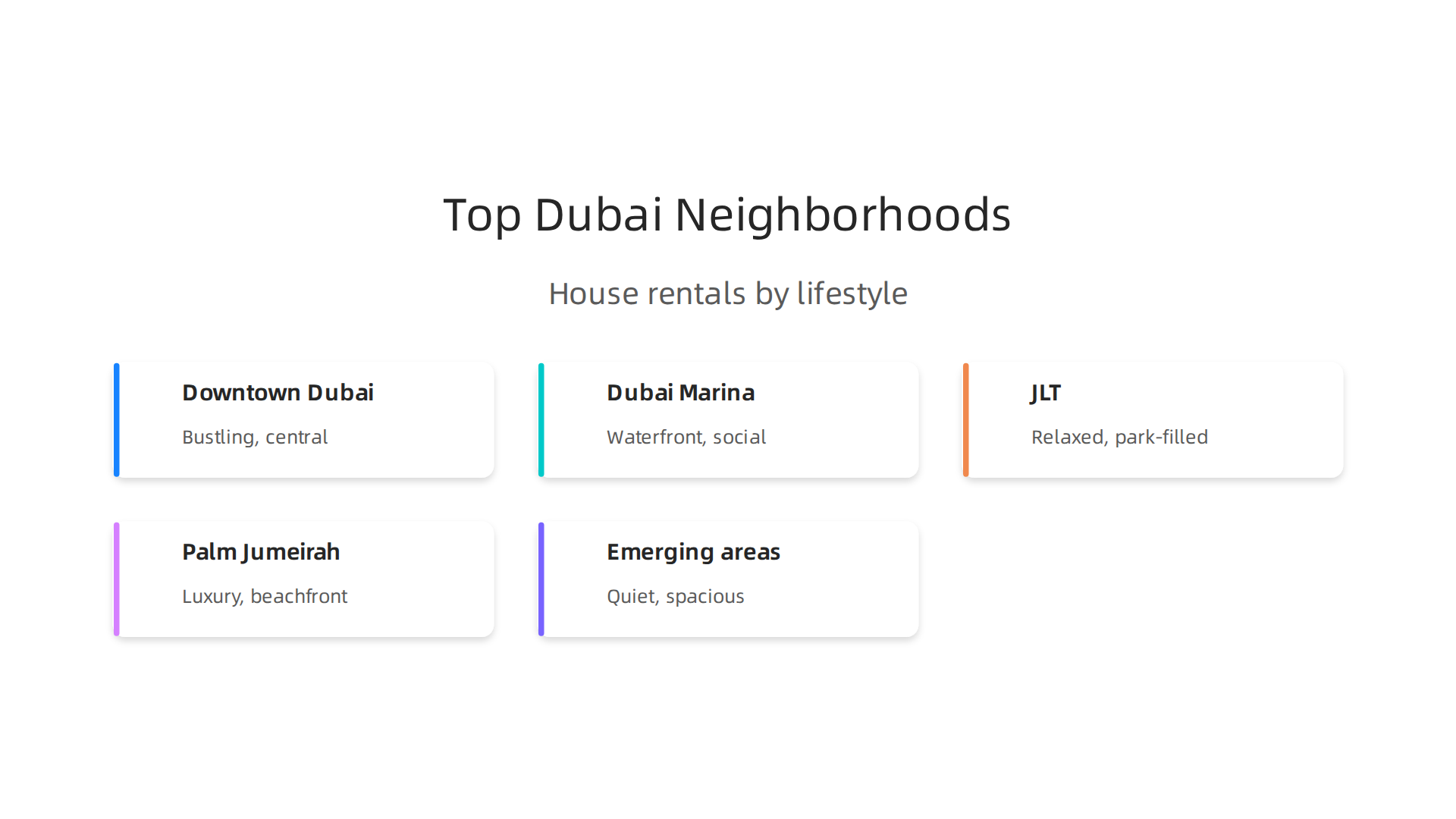
Downtown Dubai: The Heart of the City
If you love being in the middle of everything, Downtown is for you. You are steps away from the Burj Khalifa, the Dubai Mall, and plenty of restaurants. The vibe is fast, glamorous, and always busy.
As of 2026, apartment dubai prices here range from about AED 60,000 to 140,000 for a studio, with one-bedroom units costing between AED 90,000 and 160,000 per year, according to data from dubairealestate.net. The rental yields in Downtown Dubai range from 4.11% to 7.92%, which makes it attractive for investors too.
Best for: Young professionals, couples, and anyone who wants the city at their doorstep.
Nearby metro: Burj Khalifa/Dubai Mall station on the Red Line.
Dubai Marina: Waterfront Living
Dubai Marina is one of the most popular spots for expats. You get stunning water views, a buzzing promenade, and hundreds of cafes and shops. It is also close to the beach and JBR.
Average rents in Dubai Marina are around AED 68,000 for a studio, AED 97,000 for a one-bedroom, and AED 154,000 for a two-bedroom. You can also find apartments for rent in Dubai Marina on a short-term basis if you need flexibility.
The average daily rent in Dubai Marina is about AED 516, according to dubizzle. That is good context if you are considering a shorter stay first.
Best for: Water lovers, active people, and those who want a social lifestyle.
Nearby metro: Dubai Marina, DMCC, and Sobha Realty stations on the Red Line.
Jumeirah Lake Towers (JLT): Great Value
JLT is right next to Dubai Marina but usually costs less. The community is built around man-made lakes, with lots of parks, gyms, and small shops. It feels more relaxed and family-friendly.
According to Bayut, the average rent for a two-bedroom unit in JLT is around AED 118,000 per year. That is noticeably cheaper than a similar unit in the Marina. You also get easy access to the metro and major roads.
Best for: Families, runners, and people who want a quieter vibe without being far from the action.
Nearby metro: JLT and Sobha Realty stations on the Red Line.
Palm Jumeirah: Luxury at a Price
The Palm is Dubai’s most famous address. It offers beachfront villas and high-end apartments with incredible views. If budget is no concern, this is where you want to be.
Rents here are high. A typical one-bedroom apartment starts around AED 130,000 and goes up fast. Villas can cost AED 400,000 or more per year. But the lifestyle is unmatched, with private beaches, five-star hotels, and top restaurants.
Best for: High earners, families who want space, and anyone looking for prestige.
Nearby metro: There is a tram connection, but you will likely need a car or taxi.
Emerging Communities: Better Value
If you want more space for your money, look at newer communities like Dubai South, Dubai Hills Estate, or Al Furjan. These areas are growing fast. They offer new villas and townhouses at prices that are much lower than central areas.
For example, a three-bedroom villa in Dubai South can cost around AED 100,000 to 140,000 per year. In Al Furjan, the same size might run AED 120,000 to 160,000. Compare that to Arabian Ranches where similar homes can cost AED 180,000 or more.
Best for: Families who want a garden, schools nearby, and a quieter life.
Nearby metro: Some areas have metro access, but a car is usually needed.
Quick Comparison Table
| Neighborhood | Studio (AED/year) | 1-Bed (AED/year) | 2-Bed (AED/year) | Vibe |
|---|---|---|---|---|
| Downtown Dubai | 60k-140k | 90k-160k | 130k-200k+ | Bustling, central |
| Dubai Marina | 68k-85k | 97k-130k | 154k-180k | Waterfront, social |
| JLT | 55k-75k | 80k-110k | 118k-140k | Relaxed, park-filled |
| Palm Jumeirah | N/A (rare) | 130k+ | 200k+ | Luxury, beachfront |
| Emerging areas | 40k-60k | 60k-90k | 90k-140k | Quiet, spacious |
Note: Prices are approximate for 2026 and vary by building, view, and furnishing.
For a deeper look at how these neighborhoods perform as investments, check out our guide to Dubai real estate market trends and high rental yields. It covers which areas offer the best returns and growth potential.
Your choice really comes down to budget and lifestyle. Do you want to walk everywhere in a vibrant neighborhood? Go Downtown or Marina. Do you want a garden and quiet streets? Look at emerging communities. Either way, Dubai has a home for you.
How to Effectively Search for a House for Rent in Dubai
So, you know which neighborhood fits your lifestyle. Now the real work starts: actually finding that perfect house for rent in Dubai. With so many listings out there, it can feel overwhelming. But don’t worry. Here are the best ways to search, broken down simply.
Online Portals: Your First Stop
Most people start their apartment Dubai search on websites like Property Finder, Bayut, and Dubizzle.
These platforms have thousands of listings. You can filter by price, location, number of bedrooms, and more. They are free to use and give you a good sense of what is available.
Each portal has its own strengths. Property Finder is known for high-quality listings from big agencies. Bayut often includes detailed neighborhood guides and market reports. Dubizzle has a mix of listings from agents and private landlords, which can sometimes mean better deals.
One tip: set up email alerts. That way you get notified the moment a new property management house for rent listing goes live. But be careful. Some listings might be old or fake. Always check the date and verify with the agent before you contact them.
For a reliable example, check out the listings on Property Finder for Dubai Marina. It shows current daily, weekly, and monthly rental options.
Work with a Registered Real Estate Agent
Online portals are great for browsing. But if you are serious about finding a home quickly, a good agent saves you time and hassle. In Dubai, all licensed agents must have a RERA (Real Estate Regulatory Authority) card. Always ask to see it.
A RERA-certified agent has access to the official Dubai Land Department systems. They can check if a property is legally available for rent. They also know the market well. They might show you places that are not even listed online yet. Plus, they handle negotiations and paperwork for you.
When choosing an agent, look for someone who specializes in the area you want. Ask for references. Don’t just go with the first person you call.
Niche Platforms and Social Media Groups
Sometimes the best deals never make it to the big portals. That is where niche platforms and social media groups come in. Facebook groups like "Dubai Rentals" or "Dubai Expats Housing" are full of posts from landlords and tenants directly. You can also find rooms or shared villas that way.
Another option is platforms like Vrbo or Airbnb for short-term rentals if you want to try a neighborhood before signing a long lease. These can be costly, but they give you flexibility.
If you are an investor thinking about renting out your own property later, understanding the rental market now is smart. Our guide on Dubai real estate market trends and high rental yields shows you which areas offer the best returns.
Quick Tips for a Smooth Search
- Always visit the property in person before paying anything.
- Ask about maintenance and who handles repairs.
- Check the Ejari registration process. It is mandatory for all tenancy contracts in Dubai.
- Read the contract carefully. Look for clauses about early termination and renewal fees.
With these methods, you will find your next home without the stress. Start with the portals, then connect with a certified agent, and keep an eye on social groups for hidden gems. Good luck with your search!
Budgeting for Your Rental: Costs and Fees Explained
You have found a great listing for a house for rent in Dubai. The monthly rent looks good. But wait. There are more costs you need to know about before you sign anything. Let me walk you through the real numbers so you do not get surprised later.
Upfront Costs You Pay Before Moving In
When you agree to rent an apartment Dubai, you usually pay several fees at once.
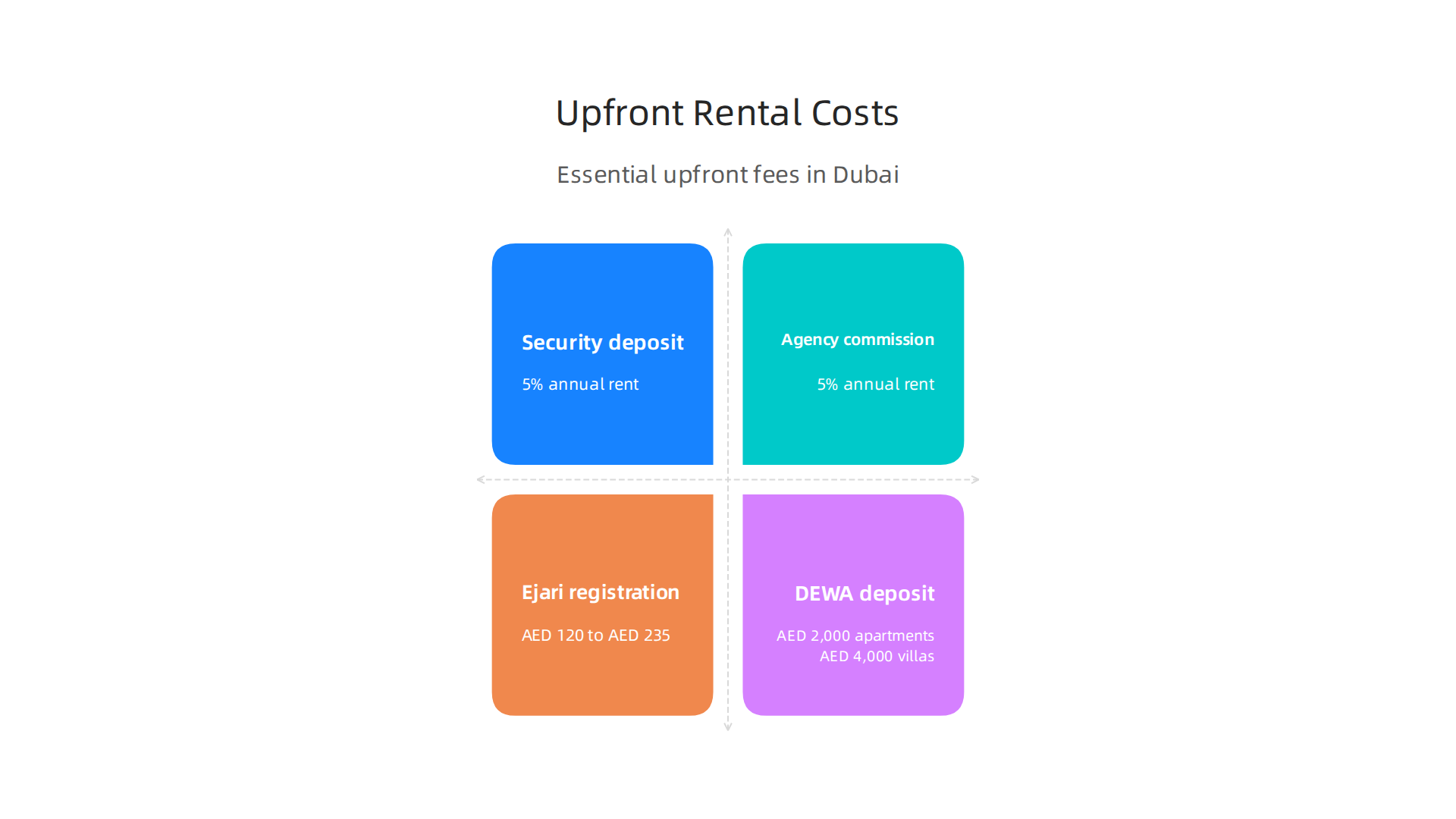
Here is what to expect.
First is the security deposit. This is typically 5% of the annual rent for furnished places. It covers any damage. You get it back when you move out, as long as the place is in good shape.
Next is the agency commission. In Dubai, this is usually 5% of the annual rent. For example, if your rent is AED 100,000 per year, you pay AED 5,000 to the agent. According to Property Finder’s guide to rental costs, this is a standard fee set by RERA.
You also need to pay for Ejari registration. This is a must for all tenancy contracts. The fee ranges from AED 120 to AED 235 depending on how you register. If you use the Dubai REST app, the cost is around AED 220 plus VAT. For more details, check out this explanation of Ejari.
Finally, there is the DEWA deposit. That is your electricity and water connection. You pay a one-time deposit of AED 2,000 for apartments and AED 4,000 for villas. This is refundable when you close your account.
Monthly and Ongoing Costs
Your biggest ongoing cost is the rent itself. In Dubai, you usually pay with post-dated cheques. Many landlords ask for one to four cheques per year. Some offer monthly payment plans through platforms like Keyper, but check their fees.
You also have the municipality housing fee. This is 5% of your annual rent. It appears on your DEWA bill each month. So if your rent is AED 100,000, you pay about AED 417 extra per month on your utility bill.
Some areas have separate cooling fees. If your building uses district cooling (like Empower or Tabreed), you pay a monthly charge. This can range from AED 500 to AED 1,500 depending on the size of your home. Always ask the landlord if cooling is included in the rent or not.
Service charges for the building are usually included in your rent. But check your contract. Some landlords pass these costs to tenants.
How to Negotiate and Save Money
You can negotiate on rent. The RERA Rental Index helps you check if the asking price is fair. Look up your building on the RERA index. If the rent is higher than the index suggests, you have a strong reason to ask for a lower price.
Also, in 2026, Dubai uses the Smart Rental Index. This system uses AI and real-time data to set fair rental values. Use it to back up your negotiation.
Another tip: offer to pay with fewer cheques. If you can pay the full year upfront, many landlords will give you a discount of 5% to 10%. Every bit helps.
If you are an investor thinking about renting out your own property later, learning how to estimate costs now is smart. Our guide on Dubai real estate market trends and high rental yields explains which areas give the best returns for landlords.
Budgeting the right way means you enjoy your new home without financial stress.

Plan for these costs, use the rental index to negotiate, and you will be set.
Legal Essentials: Tenancy Contracts, Ejari, and Tenant Rights
Now that you know the real costs involved, it is time to talk about the legal side. Getting this part right protects you down the road. Let me break down what you need to know.
What Must Be in Your Tenancy Contract
Every rental agreement in Dubai must use the official RERA template. This standard form is not optional. It includes key details like the rent amount, payment schedule, contract duration, and maintenance responsibilities. Both you and the landlord must sign it. Do not sign anything that looks different from the standard form.
Ejari Registration: Why It Is a Must
Once you sign your contract, you must register it with Ejari. This is the official Dubai Land Department system that makes your tenancy legally recognized. Without it, you cannot activate your DEWA connection or even get a parking permit in some areas. The Wasl guide to Ejari registration explains that an Ejari certificate confirms your contract is valid under Dubai law.
The registration process is simple. You need your signed contract, your Emirates ID, and your visa. You can do it through the Ejari registration system at a typing center, online via the Dubai REST app, or at a service center. The fee is about AED 120 to AED 235. You must register within 30 days of signing. If you miss this deadline, you could face fines.
Tenant Rights and Protections
Dubai gives tenants strong rights. The RERA Rental Index sets a cap on how much your landlord can raise the rent each year. If your landlord tries to raise it more than what the index allows, you have the right to say no.
The landlord must also give you a 12-month notice before any rent increase. If they fail to do this, the increase is not valid. For disputes, you can go to the Rental Dispute Center (RDC). They handle issues like deposit returns, maintenance problems, and illegal evictions. The process is straightforward and designed for tenants.
If you are thinking ahead about your own investment property, knowing these rules helps you become a fair landlord. Our guide on maximizing rental yields in Dubai shows how treating tenants well leads to better long-term returns.
Understanding your rights and the legal steps makes renting easy. Always use the RERA contract, register with Ejari on time, and know that the rental index protects you from unfair increases.
Step-by-Step Guide to Securing Your Dream Rental Property
Now that you know the legal side, let’s walk through the exact steps to get the keys in your hand. The process from shortlisting to moving in is straightforward if you follow the right order.

Here is how it works.
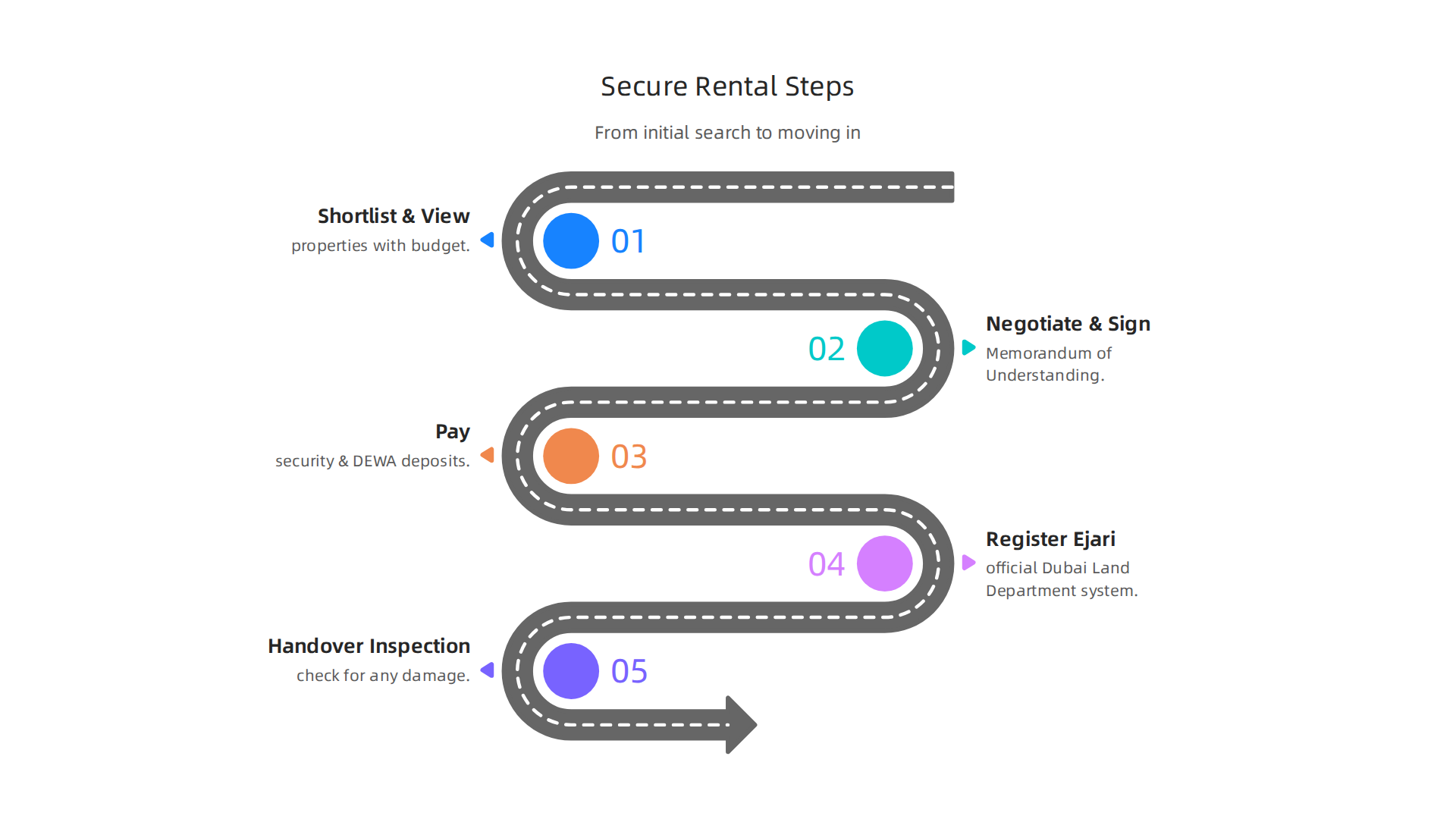
Step 1: Shortlist and View Properties
Start with a clear budget and a list of must haves. In 2026, Dubai rental listings are rising as tenants seek better pricing and flexibility, according to a report by The National. This means you have more choices now than a year ago.
When you search for a house for rent dubai, use filters for location, bedroom count, and amenities. If you are looking for an apartment dubai in areas like Dubai Marina or JLT, book viewings on the same day to compare them side by side. Do not rush. Take photos and notes during each visit.
Step 2: Negotiate and Sign the MOU
Once you find the right place, negotiate the rent and payment terms. Market data from Sands of Wealth shows rent growth has slowed to around 4 to 6 percent in early 2026. This gives you room to ask for a better deal.
When you agree on terms, you sign a Memorandum of Understanding (MOU) or the official RERA tenancy contract. Read every line. Make sure the rent amount, payment schedule, and maintenance rules are clear.
Step 3: Pay the Deposit
You will pay a security deposit, usually 5 percent of the annual rent for an unfurnished unit. You will also need to pay the DEWA connection deposit. According to a guide by West Gate Dubai, the DEWA deposit is typically AED 2,000 for apartments and AED 4,000 for villas. Keep your receipts for all payments.
Step 4: Register Ejari
Ejari registration makes your tenancy official under Dubai law. You can do it through the Dubai REST app by selecting the "Register Ejari Contract" option, as explained by Engel & Völkers. You need your signed contract, Emirates ID, and visa. The fee is about AED 220 plus VAT. Register within 30 days to avoid fines.
Step 5: The Handover Inspection
Before you move in, do a thorough handover inspection with the landlord or property manager. Check all switches, taps, air conditioning units, and furniture if the unit is furnished. Take photos of any damage. This protects your deposit when you move out.
Timeline Expectations
You can go from viewing to moving in within 3 to 7 days if everything is ready. The Ejari registration takes 24 hours. DEWA connection takes 24 to 48 hours. Plan your move in date around these steps.
The Role of a Property Manager
A good property manager handles the entire rental process for the landlord. They arrange viewings, negotiate terms, prepare the contract, register Ejari, and manage the handover. For tenants, dealing with a professional property manager means fewer delays and fewer surprises. For landlords, it means peace of mind. If you own property and want this process to run smoothly, a professional manager can make all the difference. Learn more about maximizing your investment with our guide on proven strategies for high rental yields and growth.
Avoiding Common Rental Pitfalls in Dubai
The steps we just covered will get you far. But even careful tenants can stumble into traps. In 2026, the Dubai rental market is still active, and problems like fake listings and surprise fees are real. Here is how to spot them before they cost you money.
Scams: Fake Listings and Cash Deposits
Scammers love to post a beautiful house for rent dubai at a price that seems like a steal. They pressure you to pay a cash deposit "to hold it" before you even see the property. Here is the truth: a legitimate agent will never ask for cash upfront without a signed contract and a viewing.
Always verify the agent. Check their real estate license on the RERA website. And make sure the property is registered with Ejari. A legal tenancy contract must be registered with Ejari to be official. The Wasl guide explains that an Ejari certificate confirms the tenancy is legally recognized. If the agent cannot provide that, walk away. Also, never pay a deposit through a random link or to a person you haven’t met.
Hidden Fees That Blow Your Budget
The monthly rent you see in listings is not the whole picture. Many tenants get hit with extra charges after moving in. Common hidden fees include:
- Service charges for building amenities like pools and gyms
- Cooling charges for district cooling systems, which can add AED 500 to AED 1,000 per month
- Parking fees, especially in busy areas like Dubai Marina
- Annual maintenance fees for common areas
Before you sign an MOU for an apartment dubai, ask the landlord or agent for a complete list of all additional fees. Get it in writing. If they hesitate, consider it a red flag. The Ejari registration itself costs about AED 220 plus VAT, which is a small price for legal protection.
Maintenance Nightmares
You move in, and the AC stops working. Who pays? Under Dubai law, the landlord is responsible for major repairs like AC units, plumbing, electrical systems, and structural issues. The tenant handles minor things like changing light bulbs and keeping the place clean.
If the landlord ignores repair requests, do not just wait. Send a written notice (email or WhatsApp is fine). Give them a reasonable time to fix it. If they still don’t act, you can file a complaint with the Dubai Rental Dispute Settlement Center. They are quick and fair.
To avoid these headaches from the start, consider working with a professional property management company. They handle maintenance quickly and keep the landlord accountable. For more insight on making your rental experience smooth, check out our guide on proven strategies for high rental yields and growth. It is written for owners, but the advice helps tenants too.
Summary
This guide explains how to find a house for rent in Dubai in 2026, covering market trends, neighbourhood choices, search strategies, budgeting, legal requirements and practical steps to move in. It shows how rent growth has cooled to about 4–6% and why more listings give tenants negotiating power. You will learn the pros and cons of apartments, villas and serviced residences, plus which areas suit different lifestyles and budgets. The article breaks down real upfront costs—security deposit, agent commission, Ejari and DEWA deposits—and ongoing charges like housing fees and cooling. It walks through viewing, negotiating, signing the RERA contract, Ejari registration and the handover inspection, with timing expectations. It also highlights common pitfalls—fake listings, hidden fees, poor maintenance—and how to avoid them. Investors will find pointers on rental yields and management, while tenants get a clear checklist to rent confidently.