
Dubai Real Estate Investment 2026 Pick the Right Developer and Maximize Returns
· 21 min read
Introduction
Thinking about investing in Dubai real estate in 2026? You are not alone. The numbers tell a clear story. In the first quarter of 2026 alone, Dubai’s real estate transactions hit AED 252 billion. That is a 31 percent jump from the same period last year, according to the Dubai Land Department.
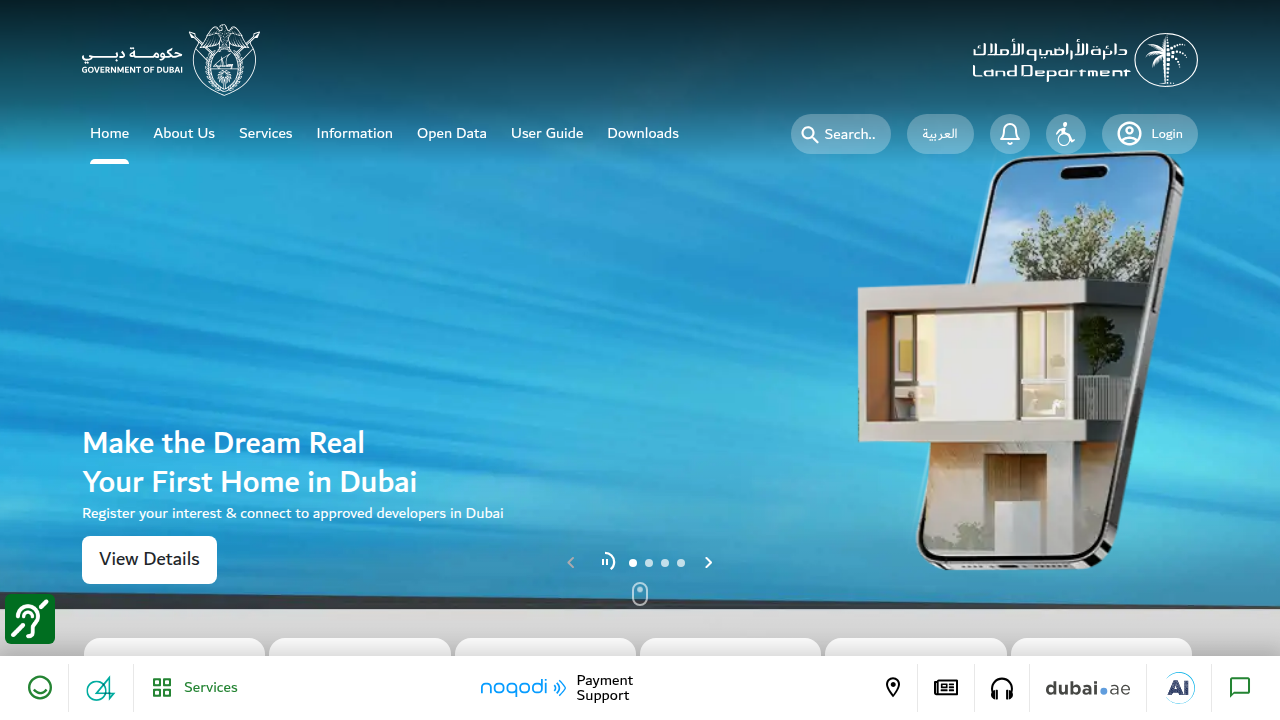
Properties are moving faster too. The latest market analysis shows demand staying strong even with lots of new supply coming online.
So why does this matter to you? Because a booming market also brings complexity. More money chasing deals means more noise. More competition. And more chances to make costly mistakes.
Here is the thing. The UAE real estate market offers incredible opportunities. But it can feel like a maze. You have a fragmented landscape of real estate investment companies to sort through.

You have regulatory rules that shift. You have the constant pressure to pick the right project at the right price. Many investors struggle to find a trusted real estate developer in UAE who matches their goals.
That is the real problem. The service landscape is scattered. You might talk to one agent who pushes off-plan deals. Another pushes commercial properties. A third suggests a real estate investment firm you have never heard of. And somewhere in the middle, you wonder if you are missing something better.
I have seen investors get stuck here. They know Dubai has potential. They see the market data. But they do not have a clear path forward.
This guide changes that. We put together actionable strategies backed by real data and expert insight. Whether you are exploring co-investment real estate for the first time, or looking for a smarter way to work with a real estate investment firm, we have you covered. You will learn how to spot the right partners, understand the numbers, and make moves with confidence.
Want a deeper look at the current market? Check out our Dubai real estate investment 2026 guide to market trends and high rental yields. It is a great next step after this introduction.
Let us start with what makes 2026 such an interesting year for UAE real estate.
Understanding the UAE Real Estate Landscape in 2026
So what is driving this market in 2026? It is not just one thing. A few powerful forces came together to shape the landscape you see today.
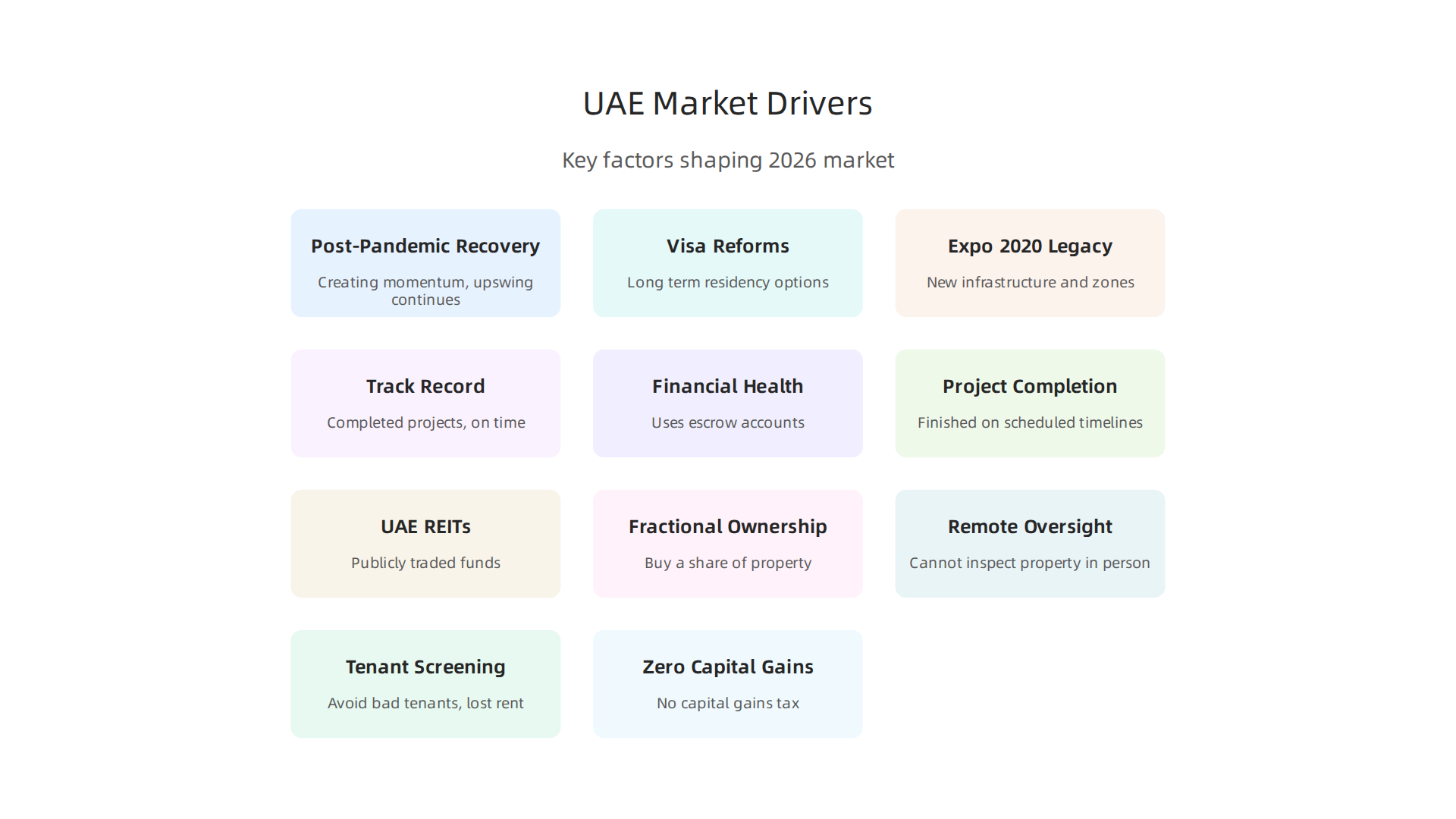
First, the post-pandemic recovery is still creating momentum. People and businesses moved to Dubai and stayed. The UAE housing market upswing continues across both sales and rentals.
Properties are selling faster than they did a year ago. That tells you demand is real, not just hype.
Second, visa reforms changed the game. Long term residency options and golden visas made it easier for expats to put down roots. That shift created steady demand for residential properties. More people staying means more people buying.
Third, the Expo 2020 legacy keeps paying off. New infrastructure, business zones, and tourism draw still pull in investors from all over the world. The Middle East real estate market is estimated to reach USD 937.85 billion in 2026, showing just how big this region has become.
The key segments you need to know
We can break the market into a few main buckets.
Residential is the biggest piece. Apartments in areas like Dubai Marina, Downtown, and JLT stay popular. Villas in places like Arabian Ranches and Palm Jumeirah attract families and high net worth investors.
Commercial is growing too. Office space demand is up as more companies set up regional hubs here.
Off-plan is where a lot of the action lives. Buying before construction lets you lock in lower prices. But it also means you need to trust the developer. That is why finding a reliable real estate developer in UAE matters so much.
Who builds the city?
The big names like Emaar, Nakheel, and Damac have built most of Dubai.
They have track records you can verify. But in 2026, we also see emerging players entering the scene. These newer real estate investment companies sometimes offer better pricing or more flexible payment plans.
The trick is knowing who to trust. A good real estate investment firm does more than sell you a unit. They help you understand the numbers, the location, and the exit strategy.
If you want to learn how smart investors compare their options, check out our guide on Dubai real estate co investment strategies for a different way to enter the market.
The landscape is full of opportunity. But the waste is also full of investors who picked the wrong partner. Next, we break down the mistakes you can avoid.
Why Choosing the Right Real Estate Developer in UAE is Critical
Picking the wrong developer can turn your dream investment into a nightmare. Delayed handovers, legal battles, or even abandoned projects have happened before. That is why doing your homework on your chosen real estate developer in UAE matters more than the unit price or the view.

Due diligence essentials you cannot skip
You need to check three things before you hand over a single dirham.
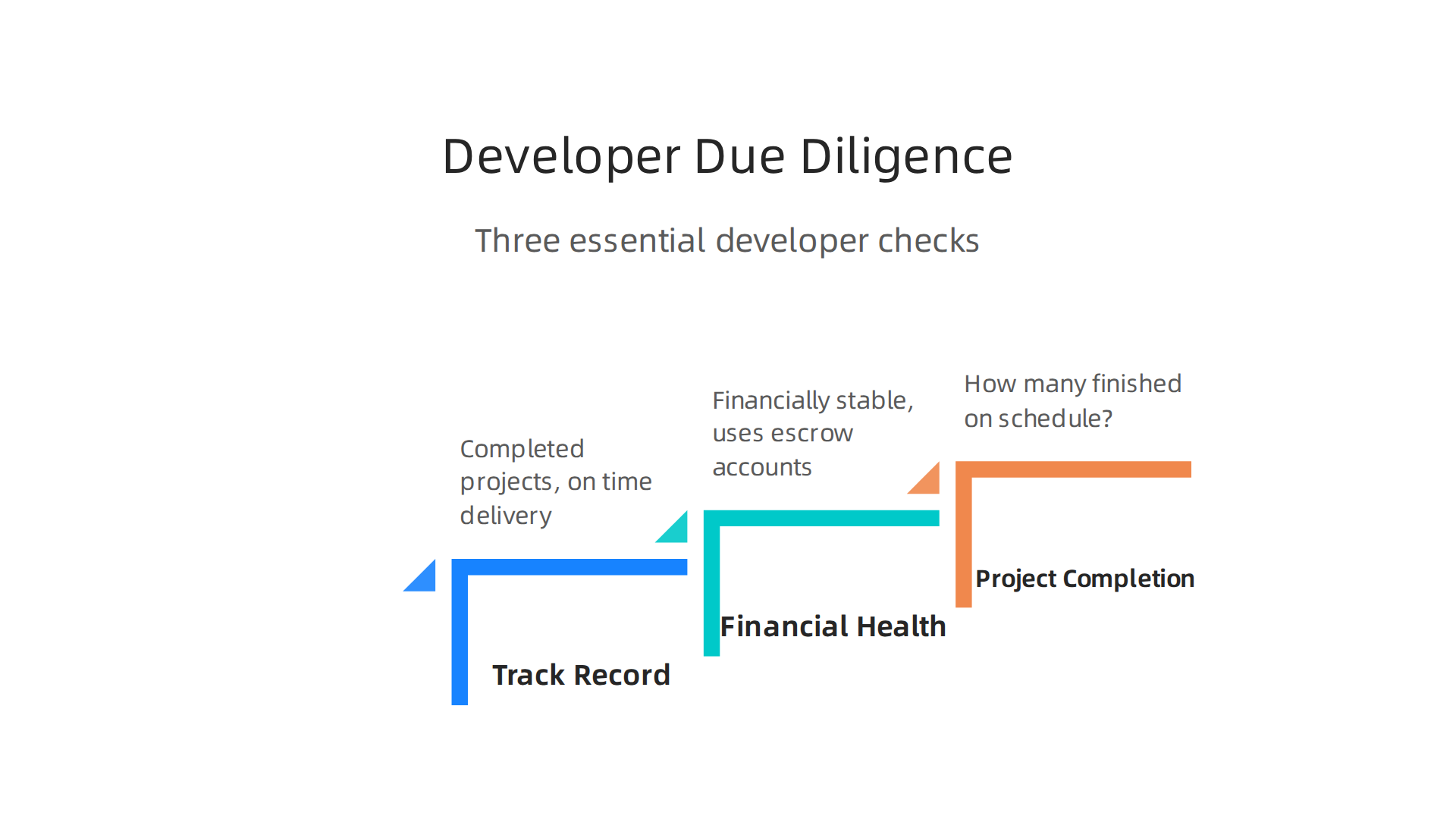
Track record. How many projects has the developer completed? Were they on time? A developer with a history of on time delivery is worth more than one with flashy marketing. Look at their past five years.
Financial health. A developer who is financially stable will not cut corners. In the UAE, the Real Estate Regulatory Agency (RERA) requires developers to register projects and often use escrow accounts for buyer payments. This protects your money. According to RERA guidelines, projects larger than 500 square meters or with more than eight apartments must be registered. That registration gives you a layer of protection.
Project completion rates. How many of their past projects finished on schedule? A high completion rate tells you the developer delivers. A low one is a warning sign.
Red flags that should stop you cold
Some developers look great on paper but hide problems. Watch for these:
- Delayed projects. If a developer has a pattern of missing handover dates, do not expect yours to be different.
- Legal disputes. Check if the developer has been involved in court cases with buyers or contractors. You can search this through the Dubai Land Department.
- Opaque financing. If the developer cannot clearly explain how the project is funded or refuses to use an escrow account, walk away.
How to verify a developer using RERA and DLD
You do not need to guess. The UAE gives you tools to check.
Start with the Dubai Land Department (DLD) website. You can search for a developer’s license and see if any complaints have been filed. The DLD also lists all registered real estate projects. If a project is not registered, that is a major red flag.
Next, check RERA specifically. The RERA number for a property is a unique identifier that proves the project is approved. You can find this in the sales contract. Always ask for it.
A reliable real estate investment firm will help you run these checks. They already know which developers have good standing. If you want to learn more about choosing the right partner, read our guide on Dubai real estate investment 2026 key market trends and high rental yields. It covers how smart investors vet both developers and properties before they commit.
Doing this research now saves you from costly mistakes later. In the next section, we will look at the specific pitfalls that catch first time investors off guard.
Top Investment Strategies for High-Net-Worth Investors
Once you have verified your chosen real estate developer in UAE, the next big question is how to actually invest. High-net-worth investors have several paths to choose from. Each option comes with its own mix of risk, reward, and liquidity. Here is a breakdown of the strategies that work best in 2026.
Off-plan vs Secondary Market
This is the most common fork in the road.
Off-plan properties let you buy at a lower price before construction finishes. The potential gain is higher if the market goes up. But the wait can be years. You also take on developer risk even if you did your homework. Liquidity is low because you cannot sell easily until handover.
Secondary market properties are ready to move into. You get rental income right away. The yields are well known. According to GuestReady, average gross rental yields for one to three-bedroom flats in Dubai range from 5.86% to 5.11% in 2026. Mid-market apartments can see yields as high as 6.5% to 8%, based on data from Luxhabitat.

This path offers better liquidity and a clearer risk profile.
For most high-net-worth investors, a mix of both works best. Buy off-plan for long term growth and secondary for immediate cash flow.
Buy-to-Let, Vacation Rentals, and Short-Term Regulations
Rental income is where many investors make their returns. In Dubai, studios and one-bedroom apartments often yield the highest returns because of strong tenant demand from professionals. This is a proven pattern.
Vacation rentals add another layer. Short-term rentals can bring in higher monthly income than long-term leases. But you must follow Dubai’s short-term rental rules. The Dubai Tourism and Commerce Marketing (DTCM) requires a permit for holiday homes. You also have to charge tourist taxes and follow safety rules. The upside is real, but the management is more hands-on.
One factor to watch is supply. Over 200,000 new units are expected to hit the market in 2025 and 2026, which could keep rent prices under pressure. That means choosing the right area matters even more.
Alternative Structures: REITs, Fractional Ownership, and Joint Ventures
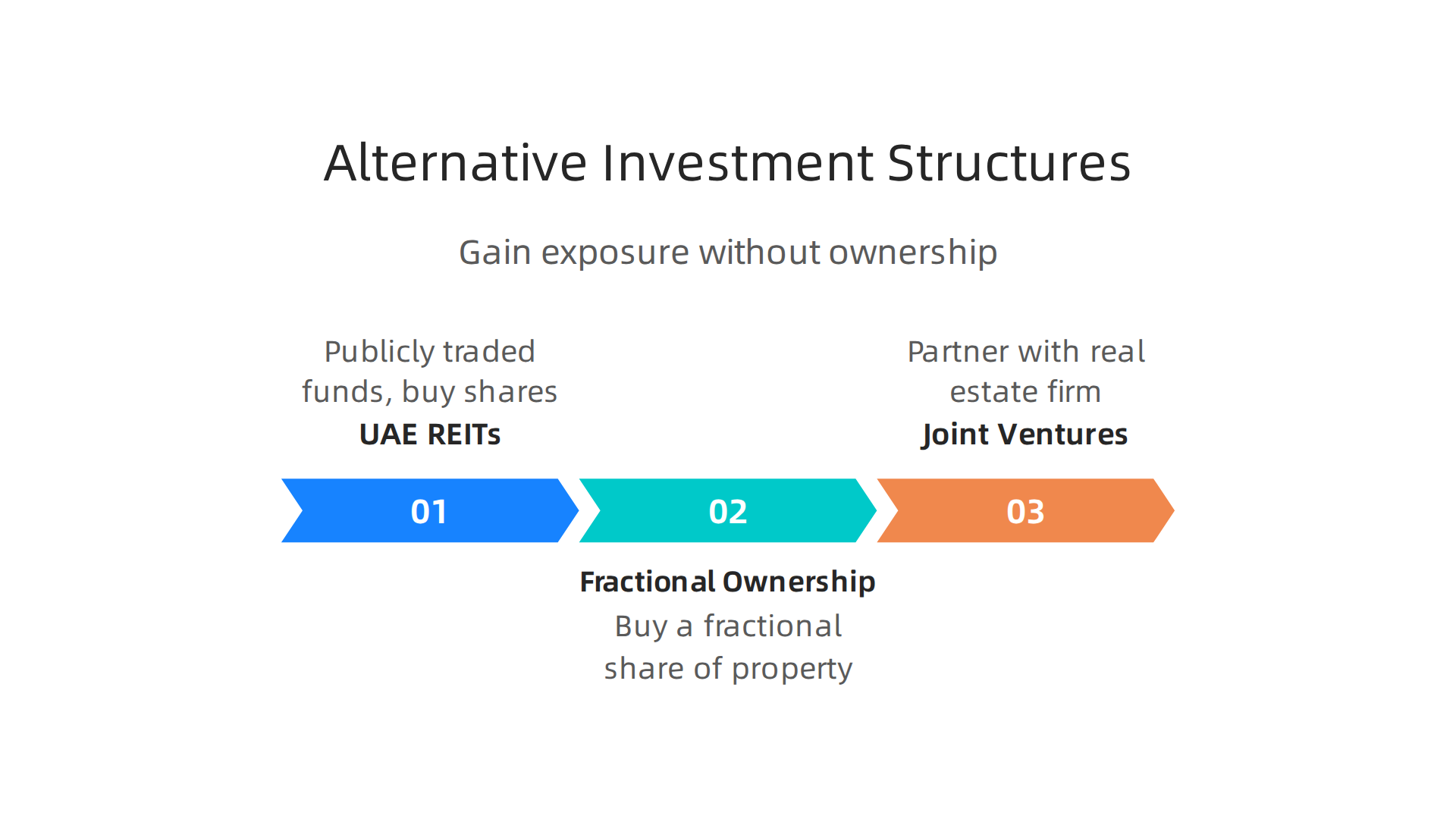
You do not have to buy a whole apartment to invest in UAE real estate. Alternative structures let you gain exposure without the full headache of ownership.
-
UAE REITs. These are publicly traded funds that own income-producing properties. You buy shares like stocks. You get dividends without managing tenants or maintenance. It is a liquid, hands-off option. For a deeper look, check out our guide on Real Estate Investment Trusts explained what they are and how they work.
-
Fractional ownership. You buy a share of a single property. This lowers the entry cost. It is popular for luxury assets like villas on Palm Jumeirah where full ownership is expensive.
-
Joint ventures with real estate investment companies. You partner with a real estate investment firm that finds, manages, and operates the property. This is a form of co-investment real estate where both sides share risk and reward. It works well for larger projects or portfolios.
Each alternative structure offers different levels of control, liquidity, and tax treatment. The right one depends on your time horizon and appetite for involvement.
Maximizing your returns starts with matching the strategy to your goals. If you want to compare property management services to optimize your rental yield, our guide on Dubai real estate investment 2026 proven strategies for high rental yields and growth can help you take the next step.
Navigating Property Management for Expat Tenants
You have picked your strategy and chosen the property. Now comes the part that decides if your investment actually pays off: managing the day to day life of a rental home.
For expat investors living outside the UAE, this is the hardest part. You cannot just stop by to check on a leaky faucet. You cannot personally screen every potential tenant. And if a maintenance issue pops up at 2 AM, you need someone local who can handle it fast.
These three challenges are the biggest headaches for landlords.
- Remote oversight. You cannot see the condition of your property in person. A small problem can become a big, expensive one if nobody is watching.
- Tenant screening. A bad tenant can cause months of lost rent and property damage. You need a system to check backgrounds and payment history.
- Maintenance coordination. From AC repairs to plumbing issues, someone needs to manage contractors and make sure the work gets done right.
This is where hiring a professional property management company becomes essential.

But not all services are the same. Let us compare what you should look for.
Comparing Property Management Providers
The first thing to compare is fees. In Dubai, property management fees usually range from 5% to 10% of the annual rental income for residential properties. A 2026 report from Engel & Völkers confirms this typical range. Some companies offer tiered packages that can go up to 15% depending on the services included, as explained in a detailed breakdown by Manage My Property.
Watch out for hidden fees. Some firms charge separately for leasing, inspections, or maintenance markups. According to a guide on hidden fees by Binayah, residential management rates are often 2-5% of annual rent, but commercial properties run higher at 7-10%. Always ask for a complete list of charges before you sign any contract.
Reliability matters just as much as price. Look for a company with a strong track record in your specific area. A good manager handles tenant screening, rent collection, and contractor coordination so you do not have to.
Legal Requirements You Cannot Ignore
Dubai has clear rules for landlords. Every tenancy contract must be registered through the Ejari system. This makes your lease officially valid. Without Ejari registration, you cannot disconnect utilities or file a legal dispute if a tenant stops paying rent.
If a dispute does happen, the Rent Dispute Settlement Center (RDC) handles it. A skilled property manager knows exactly how to navigate this process. They can manage evictions, handle bounced cheques, and resolve property damage claims without you getting involved.
To learn more about how good management connects to your overall investment results, read our guide on Dubai real estate investment 2026 proven strategies for high rental yields and growth. It shows how the right property manager directly improves your bottom line.
Taking the time to find a reliable partner protects your asset. It turns a complicated investment into a true hands off income stream. Vet your property manager just as carefully as you would vet a tenant. Your returns will thank you.
Legal Framework and Regulatory Compliance
Hiring a property manager handles the daily headaches. But you still need to know the rules of the game. Dubai’s legal system for property is clear and investor friendly. Yet it works differently than what you might be used to back home. Let us break down the key rules every expat investor must understand in 2026.
Freehold vs. Leasehold: Know Your Ownership Rights
First, you need to know where you can buy. Dubai has specific freehold zones where expats can own the property completely. This includes popular areas like Dubai Marina, Palm Jumeirah, and Downtown Dubai. In these zones, you get full ownership rights. You can sell, rent, or pass the property to your heirs without restrictions.
Outside these zones, foreigners typically get a leasehold agreement. This means you own the building but not the land underneath it. The lease can last for 99 years. Most expat investors stick to freehold zones for maximum control and flexibility.
Key Regulations That Affect Your Investment
Dubai updated several rules in 2026 that make investing easier for foreigners.
Visa Reforms. The government expanded the Golden Visa program. As of 2026, the minimum property investment threshold for an investor visa has been reduced. According to LYM Real Estate, the AED 750,000 minimum has been removed. This change opens the door for more investors to get residency. The Golden Visa itself now covers more categories of buyers, as explained in this UAE Golden Visa expansion update.
Transfer Fees. The biggest upfront cost when buying is the Dubai Land Department (DLD) fee. It is a flat 4% of the property price. Sands of Wealth notes that on a AED 2 million property, that comes to AED 80,000. Always budget for this fee when planning your purchase.
Inheritance Laws. This is a big one for families. Dubai allows non-Muslim expats to register their assets under their home country’s inheritance laws. You need a registered will to make sure your property goes to your chosen heirs without any legal complications.
The Role of DLD, RERA, and Dubai Courts
Three main bodies watch over the market and protect your investment.
DLD (Dubai Land Department). They oversee all property transactions and registrations. They make sure every sale and transfer is recorded properly.
RERA (Real Estate Regulatory Authority). This is the main regulator for any real estate developer in UAE. RERA makes sure developers follow the rules. For example, any project larger than 500 square meters or with more than eight units must be registered with RERA. This rule is explained in detail by Sell.Do. This registration protects buyers from bad actors. If you work with a reputable real estate investment firm, they will always verify RERA registration before recommending a project.
Dubai Courts / RDC. If a dispute happens with a tenant, a developer, or a real estate investment companies, these courts handle it. They have special rental and real estate divisions to solve problems quickly.
How Legal Knowledge Protects Your Profits
Understanding this legal setup helps you invest with confidence. It protects your money and makes sure you work with trusted partners. For a deeper look at how these regulations support high returns, check out our guide on Dubai real estate investment 2026: guide to market trends and high rental yields.
Knowing the rules turns you from a beginner into a serious investor. Whether you are buying alone or doing a real estate co-investment, legal knowledge is your best tool. Always work with registered agents and check a developer’s license before you sign anything.
Financing and ROI Optimization
Now you understand the legal rules. Let us talk about how to get the best financial results. Whether you are a cash buyer or need a mortgage, the goal is the same. You want every dirham you invest to earn as much as possible. Some investors also explore a real estate co-investment to share the costs. But for most, the path starts with smart financing and a clear look at real returns.
Mortgage Options for Residents and Non-Residents
If you are not paying cash, you need a mortgage. The good news is that banks in Dubai offer loans to both residents and non-residents. But the terms differ.
For residents, loan to value (LTV) ratios are generous. You can usually borrow up to 80% for a first property worth under AED 5 million. For non-residents, expect LTV ratios closer to 50% to 75%. Interest rates in 2026 are competitive, often between 4% and 6% for expats. The process is straightforward. You just need a valid passport, proof of income, and a bank statement. Many real estate investment companies can connect you with lenders that service non-resident buyers.
Calculating Net Yield
Gross rental yield is the number you see in headlines. In 2026, citywide gross rental yields in Dubai hover around 5.5% to 7%, according to Luxhabitat. Certain mid market apartments push this up to 6.5% to 8%. But gross yield tells only half the story. You need the net yield.
Net yield takes out your real costs. Start with gross yield. Then subtract service charges, community fees, maintenance costs, and vacancy periods. Service charges alone can eat up 5% to 15% of your gross rent, depending on the building. Vacancy rates in Dubai vary, but with over 200,000 new units expected by 2026, some areas may see higher vacancy, as reported by Khaleej Times. A property that looks good at 7% gross might only return 5% net. Always run the full numbers before you commit.
Leveraging Tax Advantages
Here is the biggest win for investors. Dubai has zero capital gains tax.
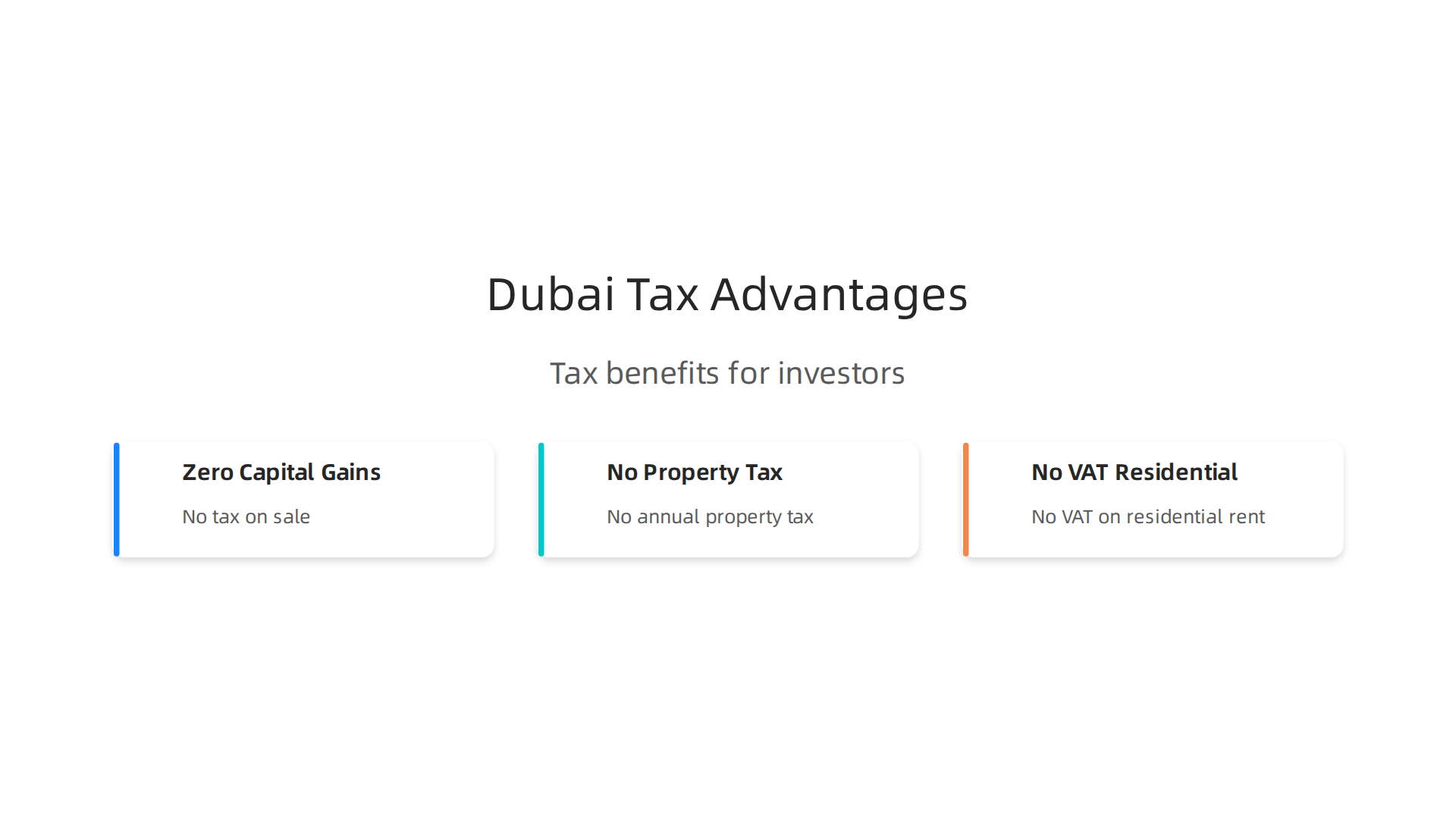
You pay nothing on the profit when you sell. There is also no property tax and no VAT on residential rent. This is a massive difference compared to markets like the UK or US.
These tax advantages mean more of your rental income stays in your pocket. A higher net yield is possible compared to almost any other global city. For a detailed breakdown of how to maximize your earnings, read our guide on Dubai real estate investment 2026: proven tips for maximizing your returns. It covers the exact strategies used by successful investors.
The combination of accessible mortgages, strong rental demand, and zero taxes makes Dubai one of the best places to build wealth. Work with a trusted real estate investment firm to structure your deal right. And always verify that any real estate developer in UAE you work with has a solid track record. Your returns depend on it.
Future Outlook: Emerging Areas and Mega Projects
You have the financing sorted and the tax advantages clear. Now the real question: where should you invest for the best long term growth? The answer lies in the mega projects coming online in 2026 and beyond.
Dubai’s real estate market is on fire right now. In the first quarter of 2026 alone, total transactions hit AED 252 billion, a massive 31% surge according to the Dubai Land Department. This momentum is fueling new developments across the UAE. Here are the hotspots to watch.
Dubai Creek Tower and Expo City
Dubai Creek Tower is set to become the world’s tallest structure once completed. It sits at the heart of Dubai Creek Harbour, a massive mixed use district. Properties near major landmarks like this tend to appreciate faster. Early investors in this area could see strong capital gains as the tower nears completion.
Expo City Dubai is another prime spot. After hosting Expo 2020, the site is transforming into a futuristic community focused on innovation and sustainability. The Dubai Land Department lists this area as a key destination for future growth. If you want to buy where infrastructure is brand new and demand is rising, this is a solid bet.
Saadiyat Island in Abu Dhabi
Do not overlook Abu Dhabi. Saadiyat Island is emerging as a cultural and luxury living hub. It will soon host the Guggenheim Abu Dhabi and the Natural History Museum. High net worth investors are flocking here. Off plan projects like Saadiyat Lagoons by Aldar start from AED 6.4 million, with handovers scheduled for Q2 2026. This area offers a different pace than Dubai but equally strong long term potential.
Trends Shaping the Market
Smart city technology and sustainable building are no longer just buzzwords. They are standard requirements from buyers and tenants in 2026. Properties with green certifications and smart home features command higher rents and sell faster. Co living spaces are also gaining traction, especially among younger professionals and remote workers.
If you want to understand how all these trends affect your portfolio, check out our guide on Dubai real estate investment 2026: proven tips for maximizing your returns. It covers the exact strategies used by top real estate investment companies to spot winning locations early.
Your Next Move
The best time to invest in these emerging areas is now, before prices fully reflect the demand. Work with a trusted real estate developer in UAE who knows the market inside out. A good real estate investment firm can help you identify which projects offer the best balance of yield and capital appreciation.
Remember, not every developer delivers on time. Always verify the track record of any real estate developer in UAE before you commit your money. The mega projects coming in 2026 and beyond offer incredible opportunities. But patience and due diligence are still your best tools.
Summary
Dubai’s 2026 real estate market is booming, driven by post‑pandemic demand, visa reforms and major infrastructure projects, but higher activity brings complexity and risk. This article walks you through the full landscape—from the main market segments and why choosing a reputable real estate developer in UAE is critical, to practical due‑diligence steps using DLD and RERA. It compares off‑plan and secondary markets, outlines investment structures (REITs, fractional ownership, joint ventures), and shows how to optimize financing, calculate net yields and manage properties remotely with professional managers. You will also get a clear primer on legal rules (freehold vs leasehold, transfer fees, inheritance) and where future growth is likely—so after reading you’ll know how to vet partners, run the numbers, pick a strategy, and protect your investment in 2026.