
Dubai Real Estate Investment 2026 Guide to Market Trends and High Rental Yields
· 22 min read
Introduction: Why Dubai Remains a Top Destination for Real Estate Investment
Thinking about real estate investment in 2026? You are not alone.

Dubai keeps proving itself as one of the most exciting markets for property buyers around the world.
The numbers tell a strong story. Gulf News reports that Dubai property sales hit Dh176.7 billion in Q1 2026 alone. Off-plan demand stayed strong, and prices held firm. This growth builds on years of steady momentum.
Research from GlobalPropertyGuide shows that the residential market sales price index rose by 12.88% year-on-year. Villas did even better, with gains above 15%. And looking ahead, Sands of Wealth expects prime properties to grow 5% to 8% over the next year. The forecast looks solid for investors who know what to look for.
But here is the challenge. The property management scene in Dubai can feel messy. Rules and processes change fast, especially if you are new to the market. Without the right help, it is easy to make expensive mistakes. An essential checklist from Gulf News reminds buyers to always check that a project is registered with the Dubai Land Department and to get official price lists directly from developers.
That is why we put this guide together. We want to give you a clear path forward. Whether you need real estate investment how to advice, want tips on real estate investment, or need to understand how to investment in real estate from another country, this guide covers it all.
We break down how to evaluate properties, handle the buying process, protect your returns, and manage your asset the right way. If you want to dive deeper into specific strategies, check out our guide on proven strategies for high rental yields and growth in Dubai.
Let us start with the big picture. Why does Dubai keep drawing in smart investors from every corner of the world?
Understanding the Dubai Real Estate Market in 2026: Trends, Data, and Outlook
The introduction gave you the headline numbers. Now let us pull back the curtain on what is actually happening in the market. Because when you are looking for real estate investment how to guidance, you need to understand the trends shaping the big picture.
Transaction Volumes Show a Mature but Growing Market
The first quarter of 2026 set a new record. According to Gulf News, Dubai property sales hit Dh176.7 billion. Off-plan demand stayed strong and prices held firm. This is not a flash in the pan. The GlobalPropertyGuide data shows the Residential Market Sales Price Index rose 12.88% year-on-year as of December 2025. Villas led the way with a 15.16% increase.
Looking forward, the Sands of Wealth analysis expects prime properties to grow 5% to 8% over the next 12 months. That is moderate, steady growth. No wild spikes, no crash fears. The market is maturing, and that is actually good news for long-term investors.
Key Districts: Different Risk and Return Profiles
Not all areas perform the same. If you want to learn how to investment in real estate smartly, you need to pick the right neighborhood for your goals.
Prime coastal areas like Dubai Marina, Downtown Dubai, and Palm Jumeirah offer strong capital appreciation and high rental demand. But they come with higher entry prices. The Engel & Völkers Residential Market Snapshot shows that luxury segments continue to attract global buyers, keeping prices stable.
Emerging suburbs such as Dubai South, Jumeirah Village Circle (JVC), and Al Furjan offer more affordable entry points. These areas are seeing a wave of new project launches. The demand is there, but you need to watch absorption rates closely. If too many new units hit the market at once, vacancy can rise and rents can soften.
For a deeper breakdown of which districts offer the best rental yields, check out our guide on proven strategies for high rental yields and growth in Dubai. It gives you a district-by-district comparison with real numbers.
Supply and Demand: New Projects vs. Absorption
One of the biggest questions for any investor is: are there too many new projects? The data from the Dubai Land Department shows that 59.6% of all sales transactions were off-plan. That tells us buyers are confident in future delivery. Developers are launching new projects, and the market is absorbing them.
What does that mean for vacancy rates? In prime areas, vacancy remains low because demand from expats and high-net-worth individuals stays strong. In emerging areas, you might see slightly higher vacancy during the handover phase. But overall, the market is well balanced. The PwC Emerging Trends in Real Estate 2026 report confirms that the Middle East region is attracting global capital, and Dubai is a top destination.
The Bottom Line for Investors
If you are looking for tips on real estate investment in Dubai, here is what the 2026 market tells you: growth is moderate but real, key districts offer clear risk/return choices, and supply is being absorbed at a healthy pace. This is not a market to rush into blindly. But with the right research and a smart district selection, you can build a solid portfolio.
Want to take the next step? Our guide on maximizing returns in Dubai real estate walks you through the exact strategies used by top investors to boost rental income and protect capital. It is the perfect follow-up to what you have learned here.
How to Choose the Right Property Management Partner in Dubai
You have picked a great district and bought your property. Now what? You need someone to handle tenants, fix leaky taps, collect rent, and keep you legal. That is where a property management partner comes in. But here is the thing: not all managers are created equal. If you are serious about real estate investment how to do it right, choosing the right partner is just as important as picking the right neighborhood.

What Should a Good Property Manager Cover?
A full service management company should handle at least these four areas:
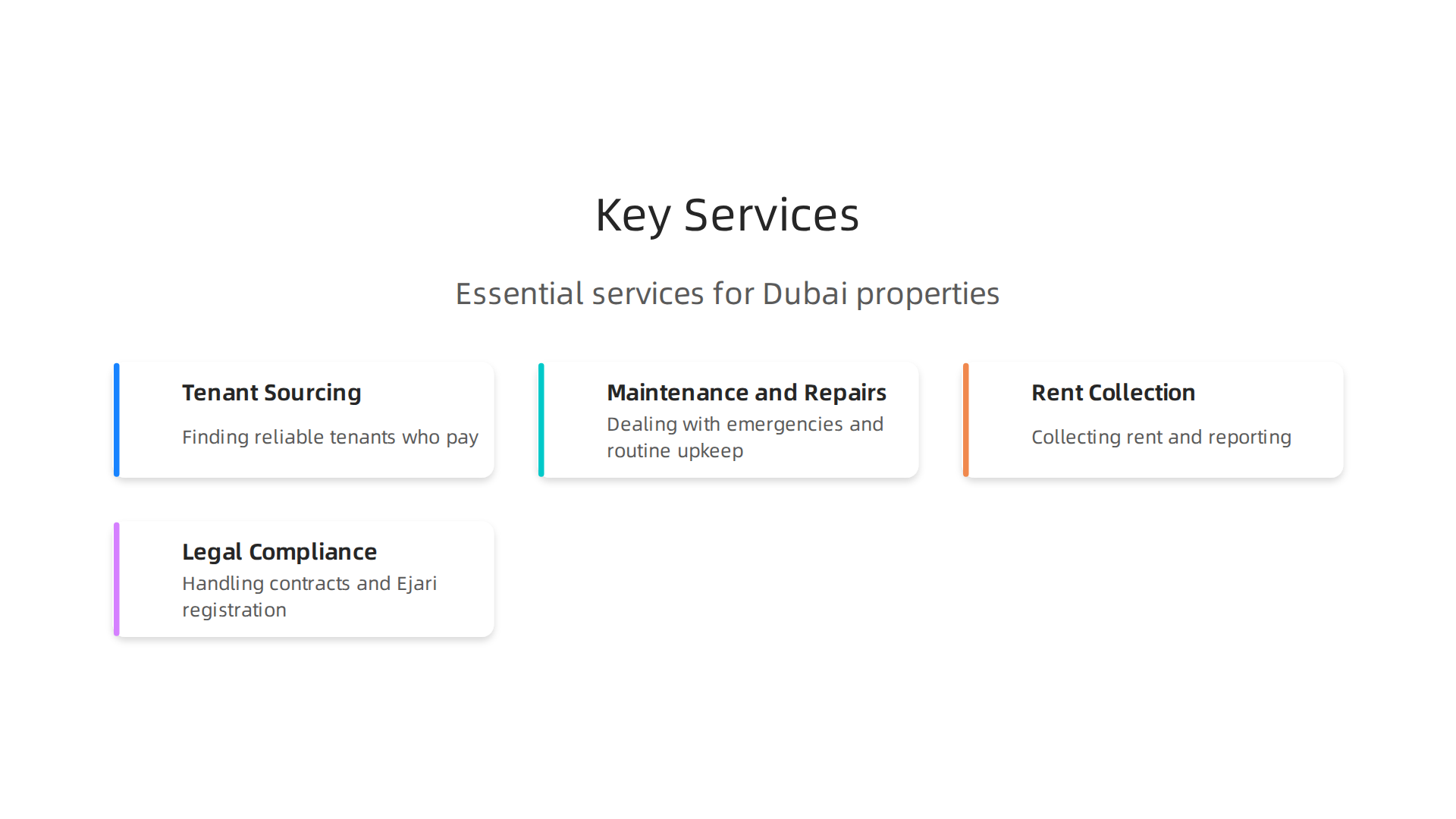
- Tenant sourcing and screening – finding reliable tenants who pay on time
- Maintenance and repairs – dealing with emergencies and routine upkeep
- Rent collection and accounting – getting your money and reporting to you
- Legal compliance – handling tenancy contracts, Ejari registration, and Dubai Land Department rules
Some firms offer extra services like regular property inspections or annual deep cleaning. You want a partner that covers the basics well before adding bells and whistles.
Understanding Fee Structures in 2026
Property management fees in Dubai vary depending on the service level and property type. According to Engel & Völkers, standard management fees range from 5% to 10% of annual rental income. A separate analysis by Cordova Property puts the typical range between 5% and 8%. For residential units, Binayah reports fees of 2% to 5% of annual rent, while commercial properties run 7% to 10%.
But watch out for hidden costs. Some companies charge extra for tenant placement, leasing commissions, or maintenance markups. The Keyper guide notes that management fees are not regulated, though the Dubai Land Department does oversee how companies operate. That means you have to ask the right questions upfront.
For short-term rental properties, management fees can jump to 10% to 50% of rental income, as Business Analyst Learnings explains. Make sure you know what you are signing up for.
Red Flags and How to Verify a Firm
Here are warning signs to watch for when you are looking for tips on real estate investment partnerships:
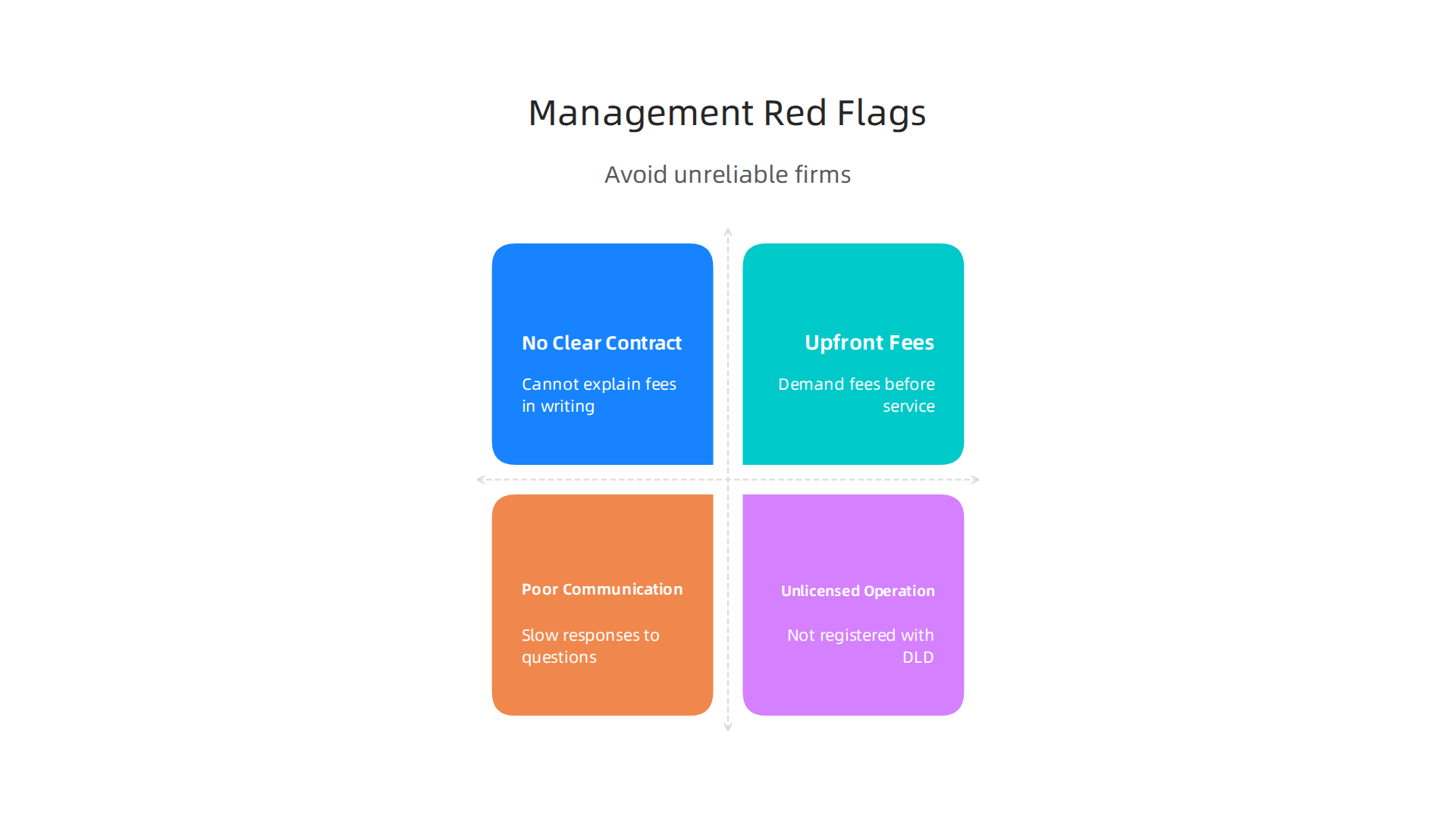
- No clear contract – If they cannot explain fees in writing, walk away
- Upfront fees – Reputable firms usually charge after they find a tenant
- Poor communication – Slow responses to your questions are a bad sign
- Unlicensed – Always check with the Dubai Land Department to verify the company is registered
Ask for references from current clients. Look at Google reviews and real estate forums. A firm with a solid track record will be happy to share proof.
Making Your Choice
The best partner for you depends on your property type, location, and how hands off you want to be. Take your time. Interview at least three companies. Ask about their maintenance network, their tenant replacement process, and how they handle disputes.
Once you have a manager in place, you can focus on growing your portfolio. For more on boosting your returns, check out our guide on maximizing your returns in Dubai real estate. It covers the exact next steps to turn a well managed property into a cash flowing asset.
Maximizing Rental Yields: Proven Strategies for Dubai Property Investors
You found the right manager for your property. Now let’s talk about something just as important: how much money your property actually makes for you. In 2026, rental yields in Dubai are not the same everywhere. They depend on where you buy, what you buy, and how you rent it. If you are serious about your real estate investment how to maximize returns, you need a clear plan.
Pick the Right Location and Property Type
Yields vary a lot by district and property size. According to GuestReady, Downtown Dubai yields range from 4.11% to 7.92%. Bigger units tend to land on the lower end. But some areas do much better. Luxhabitat says International City and Discovery Gardens offer yields up to 8% to 9% for smaller units. A PropertyFinder guide notes that a yield between 6% and 8% is considered strong in Dubai.
So if you are learning how to investment in real estate smartly, focus on high yield areas first. Also decide between off plan and ready properties. Off plan units often come with lower entry prices and payment plans. Ready properties give you rental income immediately. Both can work, but your timeline and cash flow matter.
Choose Between Short Term and Long Term Rentals
Dubai has clear rules for both. Long term rentals are simpler. You sign a one year contract, register with Ejari, and collect monthly or annual checks. Tenants are stable, and vacancy is low if you maintain the property well.
Short term rentals can earn more but come with higher fees. The Dubai Land Department and DTCM regulate holiday homes. You need a permit and must follow strict rules. The Khaleej Times reports that a large pipeline of over 200,000 new units could put pressure on rents in 2025 and 2026. That means short term might help you keep yields higher when long term rates dip. But short term also means more management, cleaning, and guest communication.
Here are tips on real estate investment for both approaches:
- Long term: Prioritize tenant retention. Happy tenants renew leases, saving you vacancy costs.
- Short term: Use dynamic pricing. Adjust nightly rates based on demand, events, and season.
Keep Tenants Happy and Cut Vacancy
Your property manager handles maintenance, but you need the right mindset too. Vacancy eats into your yield. Every empty month means lost income. The best way to reduce vacancy is to keep good tenants in place.
Simple things matter. Fix issues fast. Do annual deep cleaning. Respond to tenant requests within 24 hours. A well maintained property attracts renewals and referrals. For a deeper look at these tactics, check out our full guide on maximizing your returns in Dubai real estate. It covers everything from maintenance schedules to rent escalation clauses.
Watch Out for Oversupply
Some analysts warn that too many new units could temporarily lower prices. According to DubaiEstate, credit rating agencies predict a possible 10% to 15% price drop in 2026. That does not mean you should avoid investing. It means you should buy in areas with strong demand and keep your financing flexible. If prices drop, you might find great deals on off plan properties.
To learn more about choosing high yield locations, see our detailed strategies for rental yields and growth. It breaks down the top performing communities for 2026.
Final Thoughts
Maximizing rental yields is not complicated. Choose the right area, decide on your rental model, and take care of your tenants. Then let your property manager handle the daily work. With the right approach, your Dubai investment can deliver strong cash flow year after year.
Navigating Legal and Regulatory Compliance for Dubai Real Estate Investors
Getting high rental yields is great. But none of that matters if you do not follow the rules.

Dubai has clear laws that protect you, your tenants, and your money. In 2026, the rules are simpler than ever, but you still need to know them. Let’s walk through the most important legal and regulatory points so you can invest with confidence.
Key Laws Every Investor Must Know
Dubai’s real estate system is built on two main laws. Law No. 26 of 2007 covers property registration. It makes sure every sale and transfer is recorded with the Dubai Land Department (DLD). This protects your ownership. Law No. 33 of 2015 gives the Real Estate Regulatory Authority (RERA) power over tenancy rules. RERA sets standard contracts, handles disputes, and makes the market fair for everyone. As the Betterhomes guide explains, RERA is the main body that keeps things transparent.
So when you are learning how to invest in real estate in Dubai, your first step is making sure your purchase follows these laws. Always check that your developer is registered with DLD. The Gulf News checklist says you should confirm the project is registered and get the official price list directly from the developer.
Tax Rules: The Good News
One big reason people choose Dubai is the tax setup. There is no annual property tax. None. You do not pay ongoing ownership taxes like in other countries. But you do pay a one time fee. The DLD charges 4% of the property price at the time of purchase. This is called the transfer fee. Both buyers and sellers often share this cost.
You also need to know about VAT. Most residential property sales are exempt from VAT, but commercial properties and rental income from commercial properties may have VAT. The AZ Big Media article highlights how tax efficiency is a major draw for global investors in 2026.
For more detailed tips on how to structure your finances, check out our proven tips for maximizing your returns in Dubai real estate. It covers tax planning and expense tracking.
Foreign Ownership Rules
If you are not a UAE national, you can still buy property. But you must buy in a designated freehold area. According to the Sands of Wealth guide, as early as 2026, foreigners can only purchase in these approved zones. Popular ones include Dubai Marina, Palm Jumeirah, Downtown Dubai, and Jumeirah Lakes Towers. The Baker McKenzie legal resource confirms that the Ruler of Dubai decides which areas are open to foreign buyers. So always check before you commit.
Investor Visa: Major 2026 Update
This is a big change. In the past, you needed to own property worth at least AED 750,000 to qualify for a two year investor visa. As of early 2026, that minimum has been removed. A KPMG alert confirms that sole owners no longer have a minimum property value requirement. Joint owners also have new thresholds. The LYM Real Estate article explains that this makes Dubai even more accessible for international buyers.
What does this mean for you? If you are looking at ways to invest in real estate and also want residency, this reduces the barrier. You can buy a lower priced property and still get a visa. Just make sure you have the right documents. The Economic Times slideshow lists key documents: title deed, valid passport, health insurance, and a good conduct certificate.
Staying on Track
Legal compliance might feel boring, but it protects your investment. Without it, your yields mean nothing. So take the time to understand these rules. A qualified property manager can help you with many of them. They handle Ejari registrations, tenancy contracts, and maintenance compliance.
For a broader look at choosing the right areas and strategies, read our proven strategies for high rental yields and growth. It connects the legal side with your overall investment plan.
In short, follow the laws, pay your transfer fee, buy in a freehold area, and use the new visa rules to your advantage. That is the smart way to handle real estate investment how to in Dubai.
Remote Property Management: Tools and Best Practices for Distant Investors
So you have followed the legal steps. You bought in a freehold area. You sorted your visa. Now you are sitting in your home country wondering, “How do I actually manage this place from here?”
That is the real challenge of real estate investment how to do it from abroad. But here is the good news. In 2026, technology makes it easier than ever. You just need the right tools and the right team.
Technology Solutions That Work
You do not need to be in Dubai to know what is happening at your property. Smart tools let you keep an eye on everything from your phone.
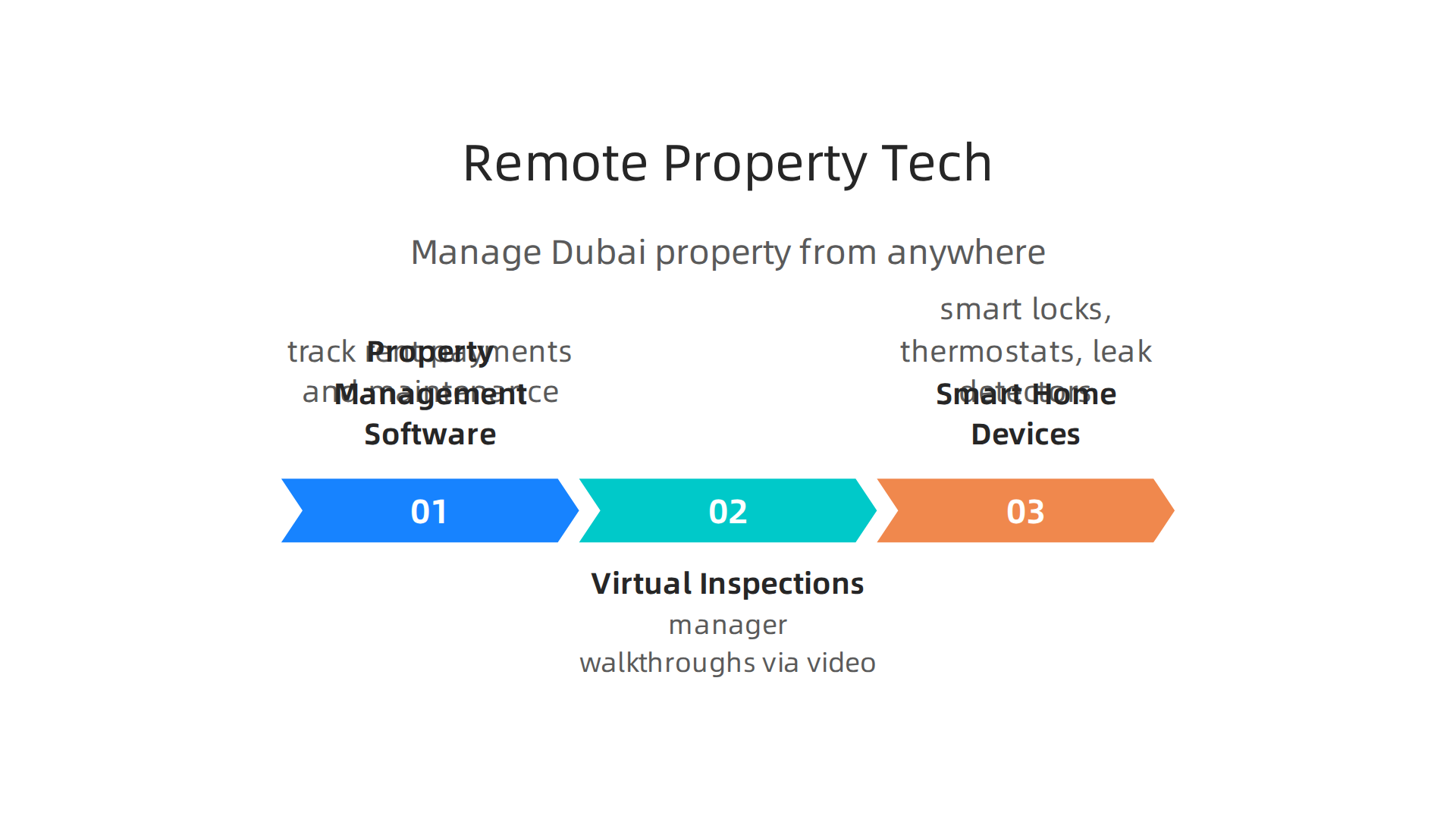
First, property management software is a must. These platforms track rent payments, maintenance requests, and tenant communications all in one place. Many also connect directly to your bank account so you can see deposits in real time.
Second, use virtual inspections. You can ask your property manager to walk through the unit on a video call. This way you see the condition of the property without flying out. Some companies even offer 360 degree virtual tours.
Third, add smart home devices. Smart locks let you give access to cleaners or repair people without being there. Smart thermostats and leak detectors alert you to problems early. Small investments like these can save you from big repair bills later.
Building a Reliable Local Team
Technology is great, but it cannot replace good people on the ground. You need a local team you trust.
Your most important partner is a professional property manager. They handle tenant screening, rent collection, and maintenance coordination. According to the Engel & Völkers fee guide, management fees in Dubai usually range from 5% to 10% of annual rental income. That is a small price for peace of mind.
You also need a maintenance handyman who responds fast. Your property manager can usually recommend one. And do not forget a legal consultant. Laws change. A local expert makes sure your contracts stay valid.
For detailed advice on structuring these relationships, check out our proven tips for maximizing your returns in Dubai real estate. It covers how to vet property managers and negotiate fair fees.
Communication Protocols That Work
When you invest from a distance, communication can break down fast. You need clear rules.
Set up regular check ins. A weekly email update or a monthly video call keeps you in the loop. Use a shared calendar for important dates like lease renewals or maintenance inspections.
Create a Service Level Agreement (SLA) with your property manager. This document should state how fast they respond to tenant issues, how often they inspect the property, and how they report financials. The Keyper guide on property management costs explains that fees are not regulated, but SLAs are. So write it down and enforce it.
Finally, use a messaging platform like WhatsApp or Slack for quick questions. Keep all important documents in a shared cloud folder. That way you never dig through emails to find a contract.
The Bottom Line
You can absolutely own Dubai property from anywhere in the world. The secret is combining smart technology with a trusted local team and clear communication rules. That is how you turn real estate investment how to into a stress free experience.
For more on choosing the right areas and strategies, read our proven strategies for high rental yields and growth. It connects all the pieces of your investment plan.
Stay connected. Stay organized. And let your team handle the rest.
Long-Term Portfolio Growth and Diversification in the UAE
You have learned how to manage a single unit from home. Now it is time to think bigger. Building a long-term portfolio in the UAE means spreading your investments across different types of properties and locations.

That is how you protect your money and grow it steadily over time.
This real estate investment how to guide will show you the next steps.
Diversify Across Asset Classes and Emirates
Do not put all your money in one type of property. Smart investors mix things up.
Residential buildings like apartments and villas give you steady rental income. In Dubai, strong rental yields typically range from 6% to 8%, with some areas like International City and Discovery Gardens reaching 8% to 9% for smaller units, according to LuxHabitats yield analysis. GuestReady confirms that even in prime areas like Downtown Dubai, yields sit between 4.11% and 7.92%.
Commercial properties such as offices and retail spaces often have longer leases and higher returns, but they can be riskier during economic shifts.
Off-plan properties let you buy at pre-construction prices. Demand for off-plan is red hot right now. In Q1 2026, Dubai property sales hit Dh176.7 billion, led by off-plan transactions, reports Gulf News. If you are new to how to investment in real estate, off-plan can be a great entry point, but you must choose developers with a proven track record.
Real Estate Investment Trusts (REITs) let you invest without buying physical bricks. You buy shares in a company that owns multiple properties. This gives you instant diversification across sectors and emirates. Investing in real estate investment trusts is a low-cost way to get exposure to the entire UAE market.
Do not forget location spread. Dubai is the star, but Abu Dhabi and Ras Al Khaimah offer different price points and growth potential. The UAE Residential Property Market Analysis 2026 shows that villas in Dubai alone saw a 15.16% year-on-year price increase as of late 2025. That kind of growth is hard to find in many global cities.
For more on picking the right areas and property types, check out our proven strategies for high rental yields and growth. It breaks down which communities outperform.
Timing the Market: When to Buy and Sell
The UAE real estate market runs in cycles. You do not need to be a fortune teller, but you do need to pay attention to the signs.
Experts forecast moderate price growth of 5% to 8% over the next 12 months for prime properties, according to the Sands of Wealth market analysis. That is healthy, not overheated.
However, there is a big pipeline of new units coming. The Khaleej Times reports that over 200,000 new units could keep rent prices under pressure in 2025 and 2026. Some credit agencies even predict a temporary price drop of 10% to 15% due to oversupply, as noted by DubaiEstate. That does not mean a crash. It means you should buy when others are nervous and sell when demand peaks.
Tip: Buy during project launch phases for the best off-plan prices. Hold through the delivery stage when values typically rise. Sell before a wave of new supply hits the market.
The Engel & Völkers Residential Market Snapshot gives a clear picture of sales data and price movements as 2026 begins. Use reports like this to time your moves.
Plan Your Exit from Day One
Too many investors buy without thinking about how they will sell later. Do not make that mistake.
Resale liquidity in Dubai is generally good. The Dubai Land Department reported a 74.77% increase in sales volume year-on-year. That means you can find a buyer relatively quickly if you price your property right.
Capital gains tax is zero in the UAE. When you sell, you keep all the profit. That is a huge advantage for tips on real estate investment. Compare that to many Western countries where you lose 20% to 30% of gains to tax.
But there is one thing you must handle carefully: inheritance planning. If you die without a will in the UAE, your property may be distributed according to Sharia law, regardless of your home country rules. Foreign investors should register a will at the Dubai International Financial Centre (DIFC) Wills Service. This protects your family and ensures your assets go where you want.
For a deeper look at structuring your investments and avoiding costly mistakes, see our proven tips for maximizing your returns in Dubai real estate.
The Bottom Line
By diversifying across asset classes and emirates, timing the market carefully, and planning your exit, you turn real estate investment how to from a one time purchase into a long term wealth machine. The UAE market is still growing. The Middle East real estate market is estimated to reach USD 937.85 billion in 2026, with projections to double by 2034. That growth is powered by strong demand, government support, and a business friendly environment.
Start with one property. Then add another. Spread your bets. And always keep your exit strategy in mind. That is how you build real wealth over decades.
Summary
This guide explains why Dubai remains a top real estate market in 2026 and gives practical, step‑by‑step advice for international investors. It reviews the latest market data—strong sales, villa price gains, and moderate forecasts—then shows how to pick the right districts, evaluate supply versus demand, and avoid oversupply risks. You will learn how to choose and verify a reliable property manager, understand typical fee structures and hidden costs, and apply proven strategies to raise rental yields through location, tenancy model, and tenant care. The article also covers legal and tax basics, recent investor visa changes, and tools and processes for remote management. Finally, it explains portfolio diversification, timing and exit planning so you can build a resilient, long‑term UAE property portfolio.