
Dubai Real Estate Investment 2026 Proven Tips for Maximizing Your Returns
· 35 min read
Introduction
Thinking about making an investment for real estate in Dubai right now? You are not alone. Every day, investors from around the world look at this city and wonder if now is the right time to buy.

Here is the thing. Dubai’s property market in 2026 is still a magnet for global money. But it is also changing fast. After years of big price jumps, the market is settling into a more steady rhythm. By the end of 2025, average gross rental yields sat at around 7% for apartments and 5% for villas according to Engel & Völkers. That is solid. But the days of easy double-digit gains are cooling off.
What does that mean for you? It means you cannot just throw money at any property and hope for the best. You need a real plan.
The problem is that the Dubai market is still hard to navigate. Services are scattered. Rules can be confusing. If you are trying to manage your own real estate investment real estate from another country, it gets even harder. You need someone who knows the local scene and can help you compare your options wisely.
That is exactly why I wrote this guide.
In this article, I will walk you through the most important tips for investing in real estate in Dubai right now. We will look at market cycles, rental yields, and how to pick the right property. Whether you are interested in a real estate investment corporation or buying a single apartment, knowing the data helps you make smarter moves.
Speaking of getting the right help, if you want to talk to someone who lives and breathes Dubai real estate every day, you can connect with Ayaz Salman on WhatsApp for a free consultation. He knows the market inside out.
But first, let us set the stage. To really understand where the market is heading, we need to look at what is happening right now. So let us dive into the latest trends and what they mean for your next move.
Dubai Real Estate Market Overview 2026
So where does the Dubai property market actually stand right now? Let us break it down.
After a few years of rapid price jumps, the market has settled into a steadier pace. That is a good thing for smart investors. By the end of 2025, average gross rental yields sat at around 7% for apartments and 5% for villas and townhouses, according to Engel & Völkers. Other reports put the overall average closer to 6.7%, depending on the community as noted by Sands of Wealth. These numbers show that Dubai still offers solid returns compared to many global cities.
But the picture is not flat everywhere. Some areas are seeing bigger movements. For example, affordable villa rents in places like Dubai South jumped between 5% and 24% in recent months according to Khaleej Times. That tells us where demand is shifting. Emerging hotspots are often in more affordable zones where expats and young families are moving.
At the same time, vacancy rates are expected to rise slightly, which will bring more seasonal pricing as reported by Gulf News. Annual rental growth has also slowed from over 20% to a more stable range per Global Property Guide. This means you cannot rely on quick flips anymore. Long-term thinking matters.
What keeps demand strong? Expat inflow, visa reforms, and a generally stable economy. The UAE government continues to introduce policies that attract foreign capital and residents. That steady stream of new people keeps the rental market healthy.
If you are looking at specific developers, understanding local pricing is key. You can find a helpful breakdown in our guide on Danube Properties Dubai prices and payment plans for 2026.
Now, to make the most of your investment for real estate, you need to know which areas offer the best yields and how to manage your property once you buy. That is where professional help can save you time and money. Whether you are an overseas investor or a local owner, comparing your options is the first step.
Take a moment to compare the top property managers in Dubai and find the right partner for your asset real estate needs. It could make all the difference in protecting your returns.
Price Trends and Hotspots
So where exactly are prices moving in 2026? Not all areas are the same. That is the key thing to understand for your investment for real estate.
Villa prices have seen some interesting changes. In affordable communities like Dubai South, rents for four bedroom villas jumped between 5% and 24% recently, according to Khaleej Times. That is a big move. It shows where demand is heading. Families want more space without paying premium prices.
Apartment prices have held steady in most areas. Some older communities saw slight dips, while newer developments near metro stations kept climbing. The overall trend is moderate growth, not the double digit spikes of a few years ago. This is healthier for long term real estate investment real estate planning.
Which hotspots stand out right now? Dubai South, Dubai Hills Estate, and areas along the Expo corridor are showing the strongest capital appreciation potential. These zones benefit from new infrastructure, schools, and retail. They attract both families and professionals.
If you want to dive deeper into specific developer pricing, check out our guide on Danube Properties Dubai prices and payment plans for 2026. It breaks down costs by unit type and community.
One smart move for tips for investing in real estate is to watch where new schools and hospitals are being built. Those areas often see the fastest appreciation.
Need help picking the right spot for your asset real estate? Talk to Ayaz Salman for a free consultation. He can point you toward the best neighborhoods for your goals.
Rental Yield Benchmarks
Now that we have covered where prices are moving, let’s talk about something more important for your investment for real estate in 2026. I am talking about rental yield. That is the annual rent you collect as a percentage of the property price. It tells you how much cash your property actually puts in your pocket.
Here is the key number to remember. By the end of 2025, average gross rental yields in Dubai stood at roughly 7% for apartments and around 5% for villas and townhouses, according to Engel & Voelkers. That gap matters for your real estate investment real estate planning.
Some locations push those numbers much higher. Affordable communities like Dubai South, where rental demand is surging, can deliver yields above the overall 6.7% to 7.3% average calculated by Sands of Wealth. The trick is finding the sweet spot between price and rent.
Why do yields vary so much? It comes down to three things: property type, exact location, and nearby amenities. A studio near a metro station in JLT will yield higher than a large villa in an older suburb. That is just how the math works. Gulf News also notes that vacancy rates are expected to rise slightly in 2026, which means you cannot assume every property will stay rented all year. Seasonality is creeping back in.
One of the best tips for investing in real estate is to study yields in the communities we already highlighted. Areas with new schools, hospitals, and metro stations tend to keep vacancy low and yields stable. For a deeper breakdown of numbers by developer and community, take a look at our Danube Properties Dubai prices and payment plans for 2026 guide.
If you want to find a property that hits the 7% plus yield target, it helps to get local advice. Connect with Ayaz Salman on Whatsapp for a free consultation. He can help you match a property type and location to the yield you are aiming for.
Demand Drivers: Expat Inflow and Visa Reforms
Those strong yields we talked about do not happen by luck. They come from steady demand. And in Dubai, that demand comes from people coming here to live, work, and invest. This is a prime real estate investment real estate market for a reason.
Dubai has made it easier than ever for expats to stay long-term. The golden visa gives investors a 10-year residency. The remote work visa lets professionals live here while working for companies abroad. The retiree visa opens the door for older buyers. All these programs bring in new residents who need a place to rent or buy.
This population growth shows up clearly in the rental numbers. In 2025, affordable villa rents in places like Dubai South surged by as much as 24%, according to Khaleej Times. That is a direct sign of more people competing for homes.
If you are planning your investment for real estate, here is one of the best tips for investing in real estate: follow population growth. More people means more tenants. And more tenants means your property stays filled. That protects both your rental income and your asset real estate value over time.
For investors looking at affordable communities with strong demand, check out our Danube Properties Dubai prices and payment plans for 2026 guide. It covers areas that benefit most from this expat inflow.
And once you own a property, you will need a reliable team to handle tenants and maintenance. Compare providers to find the best property management fit for your goals.
Core Investment Principles for Long-Term Success
So we know the demand is real. People are coming, and rents are climbing. But to turn this into a successful investment for real estate, you need more than just good timing. You need a clear set of rules to guide your choices. Here are the core principles that smart investors rely on in 2026.
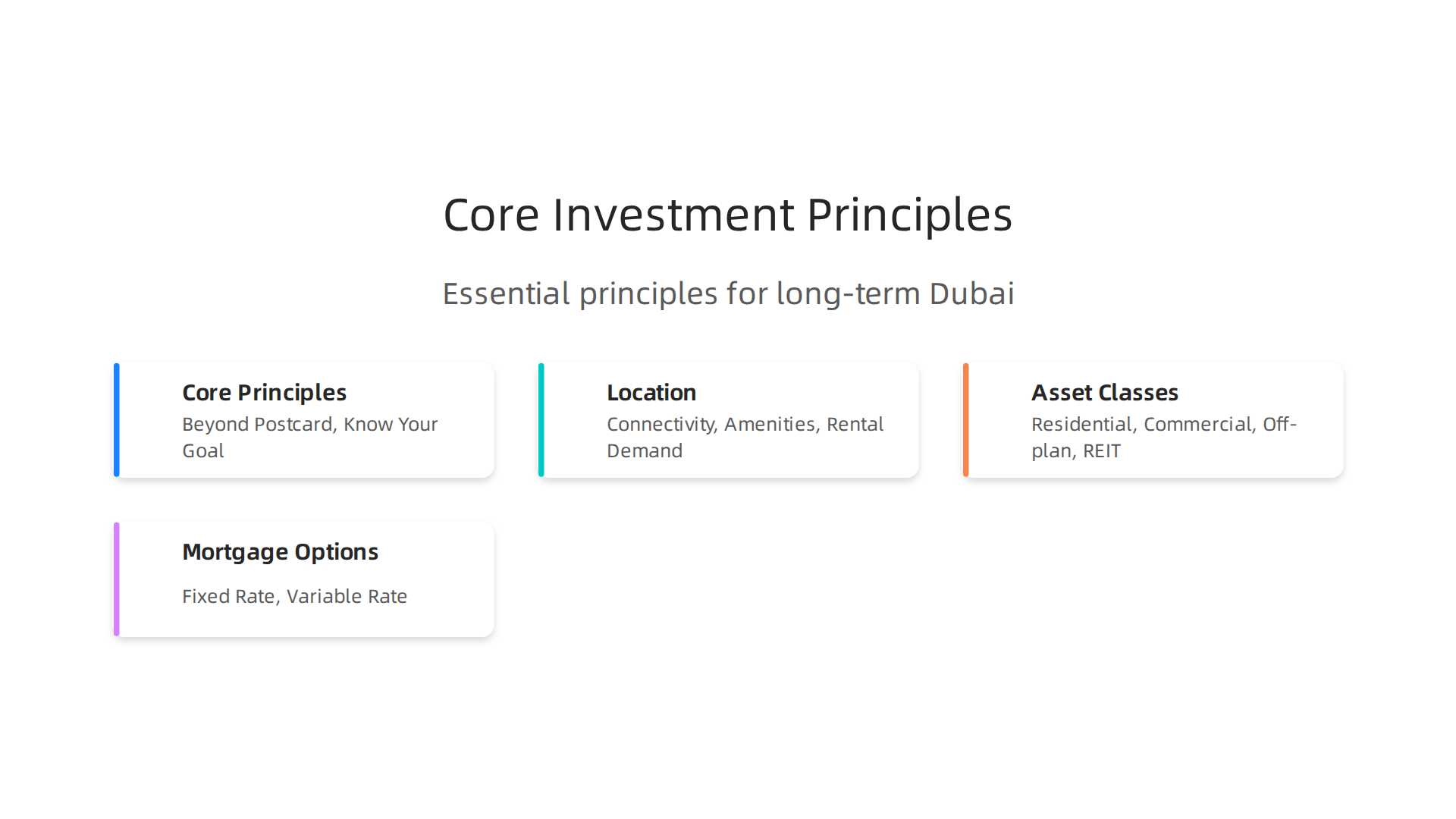
Look beyond the postcard locations.
Many beginners only search in Downtown or the Marina. The real opportunity often sits in master-planned communities and future growth corridors. Think about areas like Dubai South near the massive new Al Maktoum Airport. Or think about emerging family hubs. These places offer a strong balance of lifestyle and more affordable prices. Following the government’s development map is one of the best tips for investing in real estate you will find.
Know your goal: cash flow or appreciation?
You have to decide what you are building.
Do you want money in your pocket every month? Then target neighborhoods with gross rental yields of 6% to 8%. In Dubai, these yields typically range from 4% to 7%, with some properties going even higher (AZBigMedia).
Or are you betting on the long term? Then you might accept a lower immediate return in a prime spot because you expect the asset real estate value to double over a decade. Knowing the difference between these two goals protects your portfolio.
Diversify your holdings.
Never put all your money into just one villa or one apartment. A balanced real estate investment corporation approach means spreading your bets. Maybe you own a ready unit for steady rent, plus an off-plan studio in a new community for capital gains. Diversification keeps you safe if one area slows down.
These principles might sound simple, but applying them in Dubai is the hard part. If you want a personalized plan that fits your budget and timeline, you do not have to figure it out alone. Connect with Ayaz Salman on WhatsApp for a free consultation. A short conversation can save you months of guesswork.
Location Analysis and Master Communities
You have your investment principles in mind. Now comes the hard part: choosing the right street, block, or neighborhood. Many investors skip straight to a cheap apartment and hope for the best. That is a mistake. The location you pick decides your rental income, your property value, and your peace of mind for years to come.
Master-planned communities hold their value better than standalone buildings. Why? Because everything is designed together. Parks, schools, supermarkets, and gyms are already planned. The streets are wide. The parking is organized. Tenants and buyers pay a premium for that lifestyle. In 2026, these communities also follow the Dubai 2040 Urban Master Plan, which means future infrastructure like new metro lines and shopping districts only adds to your property’s worth. A unit in a standalone building next to a busy road will struggle to keep up.
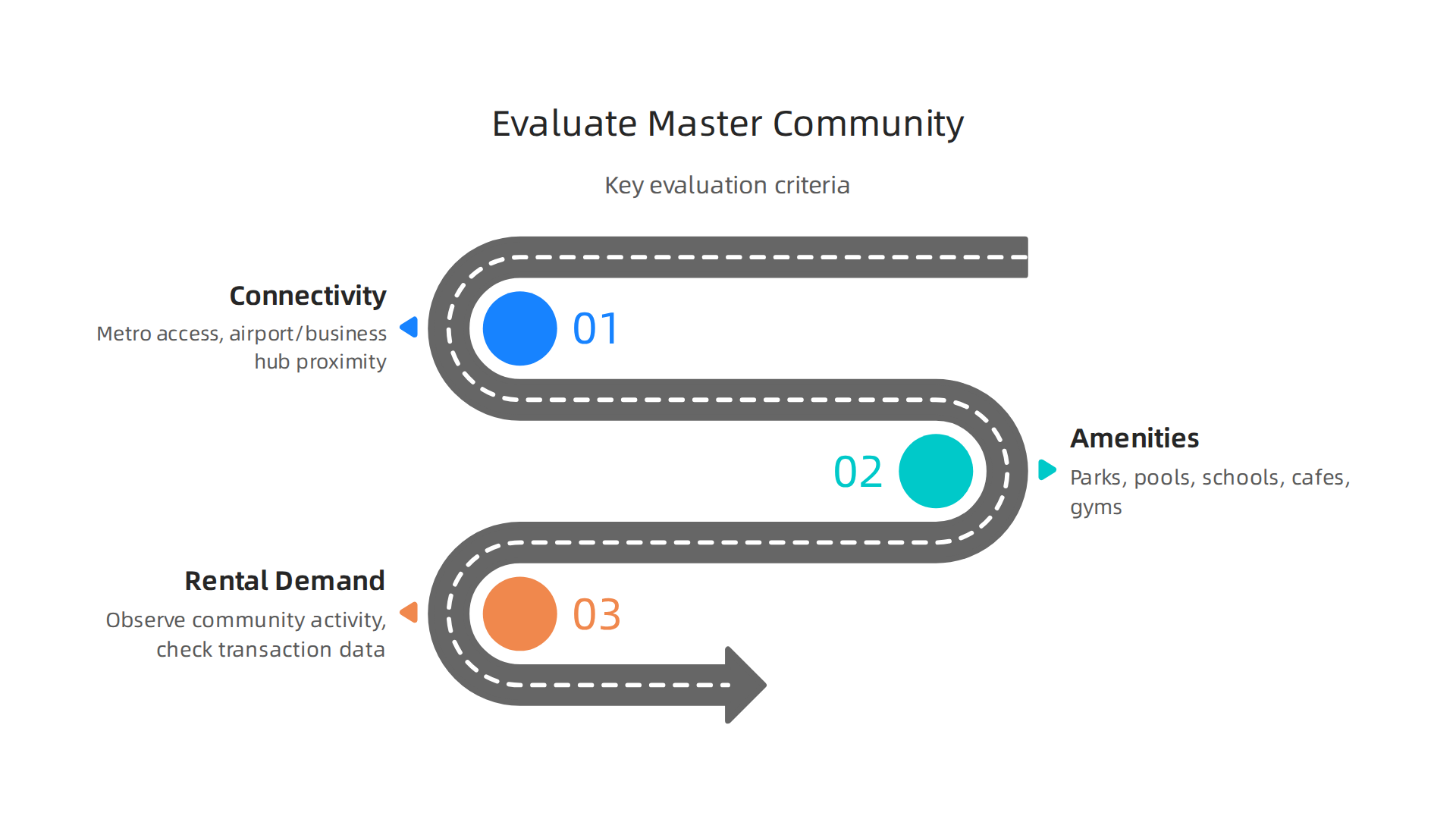
**So how do you evaluate a master community?
**
Start with connectivity. Is there a metro station within walking distance? Can you reach the airport or business hubs in 20 to 30 minutes? Communities near major highways like Sheikh Zayed Road or the new Expo Corridor tend to have high real estate investment real estate demand.
Next, look at amenities. Families want parks, pools, and schools nearby. Young professionals want cafés, gyms, and co-working spaces. A community that offers these things keeps vacancy rates low. In Dubai, average gross rental yields sit around 6–7%, but prime master-planned areas can push above 8% (Engel & Völkers). The difference comes from the quality of the living environment.
Finally, check rental demand. Walk into the community on a weekend. Are the cafés full? Are kids playing in the park? That is a sign people want to live there. You can also look at recent transaction data to see how fast properties rent out.
One community that checks these boxes is the portfolio from Danube Properties, known for solid off-plan options in master developments. Our Danube Properties Dubai price guide for 2026 breaks down current prices and payment plans in these neighborhoods.
Keep these criteria handy when you view properties. A short checklist will save you from buying a dud. And once you own a unit in a top community, you need a management team that knows the area. Compare Providers to find a partner who understands tenant expectations and rental strategy in your chosen location.
Yield vs. Capital Appreciation Strategy
Now that you know how to pick a strong community, you need to think about what kind of return you want. Here is the simple truth: no property gives you both sky-high rental income and massive value growth at the same time. You have to choose your priority.
High-yield areas like International City or Dubai Silicon Oasis offer strong monthly cash flow. Rental yields in Dubai range from 4% to 7% depending on the location, and some areas can hit over 8% (Engel & Völkers). These neighborhoods attract budget-conscious tenants, so your units stay occupied. But the property price itself may rise slowly over time.
Luxury appreciation zones such as Palm Jumeirah or Emirates Hills work the other way. Your rental yield might be lower, often 3% to 5%. Yet the property value can climb significantly as demand from high-net-worth buyers grows. You are betting on future capital gains rather than immediate income.
The smartest approach? Look at total return — that is rental yield plus capital appreciation. Your personal investment for real estate goals decide the balance. If you need steady cash flow now, go for yield. If you are building long-term wealth and can wait, focus on appreciation. Many successful investors mix both types in one portfolio.
For a current price snapshot in master communities that balance yield and appreciation, check out our Danube Properties Dubai price guide for 2026.
Still unsure which strategy fits your situation? Get personalized advice. Connect with Ayaz Salman on Whatsapp for a free consultation and find your ideal path.
Diversification Across Asset Classes
Putting all your money into one type of property is risky. Smart investors spread their bets. Think of this as a safety net. If one market slows down, another might pick up. This is the core of smart real estate investment real estate.
The classic mix includes residential, commercial, and off-plan properties. Residential units like apartments in International City give steady rental income. Commercial spaces, such as small offices or retail shops, often have longer leases and higher returns. Off-plan purchases let you buy at today’s prices and wait for the value to rise as construction finishes. Following these tips for investing in real estate can protect your asset real estate portfolio.
You do not need millions to get started. If buying a whole building is out of reach, consider a real estate investment corporation like a REIT. A REIT lets you own a small piece of many properties. You earn dividends without having to manage tenants or fix broken ACs. These funds are a great entry point for smaller budgets.
A balanced portfolio might look like this:
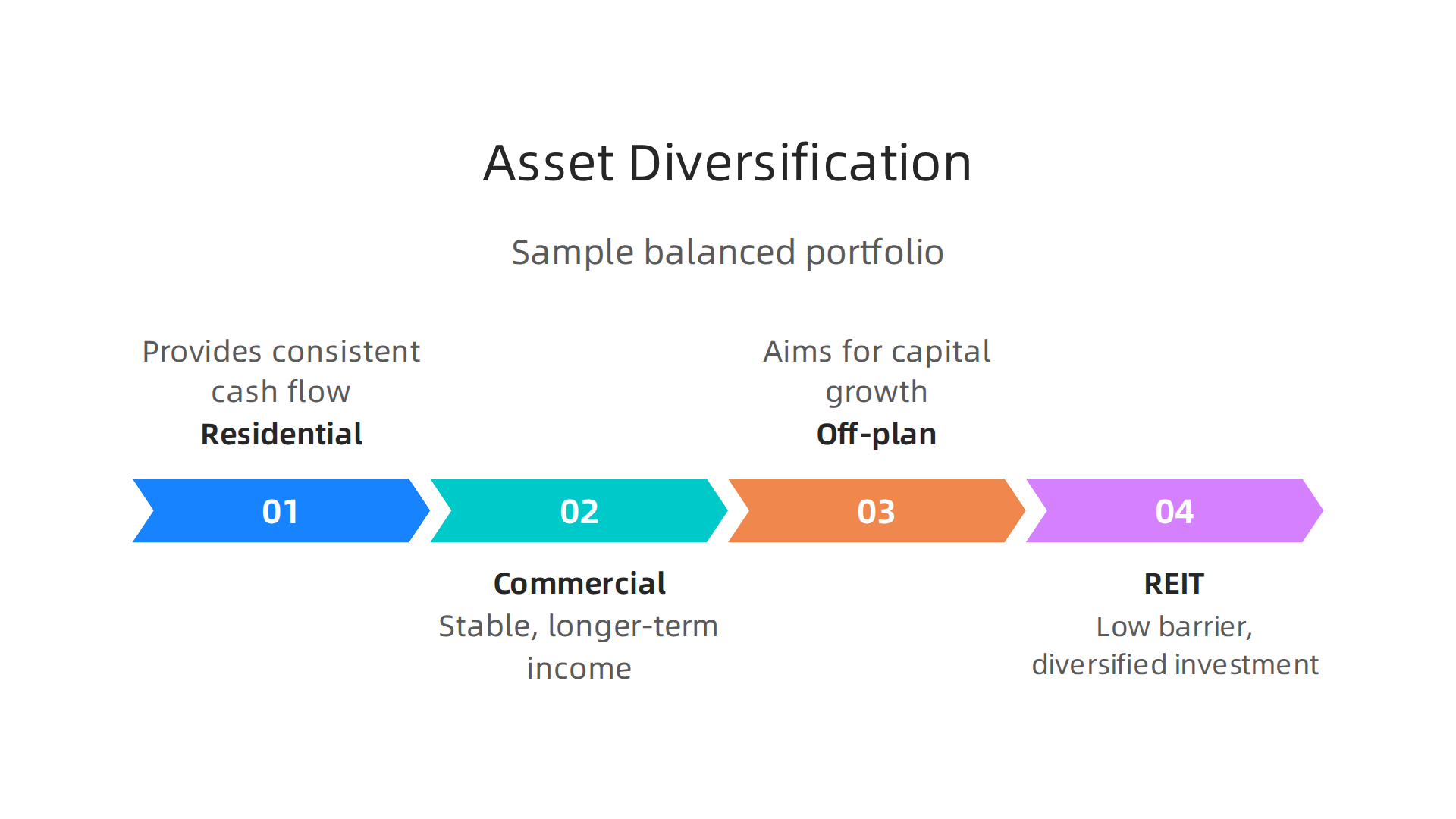
| Asset Type | Purpose | Example |
|---|---|---|
| Residential | Cash flow | Dubai Silicon Oasis apartment |
| Commercial | Stable, longer income | Office in Business Bay |
| Off-plan | Capital growth | New launch in JVC |
| REIT | Low barrier, diversified | Listed Dubai REITs |
Dubai’s market rewards this strategy. According to guides, average rental yields sit between 4% and 7% in 2026, and some areas exceed 8% (Engel & Völkers). Spreading your investment across classes helps you capture those highs while cushioning the lows. For more practical tips, check out this list of 8 great tips for investing your money in Dubai real estate.
If you are looking at off-plan deals in master communities, here is our Danube Properties Dubai price guide for 2026. It shows current prices and payment plans that can fit into a diversified plan.
Not sure how to choose the right mix for your budget? Get free, personal advice. Connect with Ayaz Salman on Whatsapp today and start building a smarter portfolio.
Navigating Property Management and Regulations
Choosing the right property manager can feel overwhelming. Dubai has many firms, and they all sound good in a sales pitch. But picking the wrong one can hurt your returns. So how do you find a partner you can trust?
Start by checking if the company is registered with RERA (Real Estate Regulatory Authority). This is not optional. A RERA licensed firm must follow Dubai Land Department rules, which protects you and your tenants. Always ask for their license number before signing anything.
Next, compare fees carefully. According to recent guides, property management fees in Dubai typically range from 5% to 10% of annual rental income (Engel & Völkers). Some firms charge up to 15% for long term leases (Bayut). But do not just look at the percentage. Ask for a full fee schedule (ClearLead Digital). Some companies add extra charges for leasing, maintenance, or inspections. A low management fee might hide high hidden costs.
Also review the contract carefully. Look for clauses on notice periods, early termination, and how maintenance emergencies are handled. A good contract will spell out performance metrics. For example, how fast do they respond to tenant issues? What is their average vacancy rate? You want a firm that tracks tenant satisfaction and property uptime. The best operators in 2026 use data to keep your property occupied and well maintained (GuestReady).
Legal compliance goes beyond RERA registration. You must understand tenancy contracts registered through Ejari. This system is mandatory. Any rental agreement without Ejari is not legally enforceable. Strata laws also matter, especially if you own in a building or community. The owners association handles common areas, and the property manager should handle all communications with them.
If you are managing a property you bought off plan, stay on top of market prices so you can set the right rent. Our Danube Properties Dubai price guide for 2026 can help you understand current rates and payment plans.
Managing property in Dubai does not have to be stressful. The right partner makes all the difference. Take the time to vet, compare, and ask the hard questions before you sign.
Ready to find a reliable property manager? Compare Providers now and choose the best fit for your investment for real estate.
How to Select a Property Manager
So you’ve compared fees and checked the RERA license. But how do you pick the right partner for your investment for real estate in Dubai?
First, look at their track record. How many years have they been in the Dubai market? A company with five or more years of local experience usually understands the ups and downs of the rental cycle better. Also check their portfolio size. Do they manage 50 properties or 500? Larger firms often have more resources for maintenance and tenant screening. But smaller firms may give you more personal attention.
Client testimonials matter a lot. Ask for references from current landlords. A good property manager will share them without hesitation. Look for reviews that mention fast response times and low vacancy rates. According to a 2026 guide for high net worth investors, the top firms track KPIs like vacancy days and tenant satisfaction scores (Ritu Kant). That kind of transparency shows they treat your asset seriously.
Transparent reporting is a must. A trustworthy manager sends you monthly statements, maintenance logs, and rental income updates. If a firm uses a digital dashboard, even better. You want to see exactly what is happening with your property at any time.
Here is a tip that many owners skip: go visit their office and see a few properties they manage. Walk through a unit they oversee. Does it look clean and well kept? Talk to the staff on site. Ask how they handle late night emergencies. Interview at least two or three shortlisted firms before you decide.

The best operators in 2026 stand out by showing real results, not just a polished website (GuestReady).
Taking these extra steps helps you avoid costly mistakes. A careful selection now protects your real estate investment real estate for years to come.
Ready to compare top rated firms? Compare Providers and find the best match for your property.
Understanding Service Fees and Contracts
Once you have a shortlist of property managers, the next step is understanding what you will actually pay. Many owners focus only on the management fee percentage and miss other charges. That mistake can eat into your returns.
In Dubai, property management fees typically range from 5% to 10% of the annual rental income (Engel & Völkers). Some firms charge up to 15% for shorter leases or premium services (MyBayut). But the management fee is just one part of the picture.
You also need to ask about the leasing fee. This is a one time charge for finding a new tenant. It might be half a month’s rent or a full month’s rent. Then there is the maintenance markup. Some companies add 10% to 20% on top of repair costs. Always get a complete fee schedule before signing anything (Clear Lead Digital).
The contract itself matters just as much. Watch for the termination notice period. Can you leave with 30 days notice, or do you have to wait 90 days? Check the liability clause too. Who is responsible if a tenant damages the property beyond the security deposit? A good contract protects your asset real estate fairly.
Performance guarantees are becoming more common in 2026. Some top firms now promise to keep vacancy rates low or hit a minimum rental income. These clauses show the manager believes in their own service.
Understanding these details is a key part of tips for investing in real estate. If you are looking at off plan options too, check out this Danube Properties price guide for the latest 2026 trends.
Once you review fees and contracts carefully, you can compare firms side by side. Compare Providers to find the one that fits your investment goals best.
Key Legal Compliance: RERA, Tenancy, Strata
After you check the fees and contract terms, you must look at the legal side. Dubai has strict rules for property owners and managers. Skipping these steps can lead to fines, disputes, or even losing your rights as a landlord. Here are the three main legal areas you need to know in 2026.
RERA Registration and the Rental Index
Every property manager you hire must be registered with the Real Estate Regulatory Agency (RERA). You can verify their license on the Dubai Land Department website. A good manager will also use the RERA Rental Index to set your rent. This tool tells you the fair market rate for your unit. It also limits how much you can increase rent each year. Following the index keeps your asset real estate safe from tenant complaints at the Rent Dispute Settlement Center.
Ejari Tenancy Contracts
All rental contracts in Dubai must be registered with the Ejari system. This is the law. Ejari makes your tenancy contract official. You need it to disconnect utilities, get an eviction order, or file any legal claim against a bad tenant. Without it, your contract may not hold up in court. This is one of the most overlooked tips for investing in real estate that can save you a lot of trouble later.
Strata Law Obligations
If your property is an apartment in a tower, you also have responsibilities under Strata Law. You must pay service charges for common areas like parking, gyms, and lobbies. These fees can vary a lot between buildings. Your property manager should review these charges every year and make sure the building owner’s association is not wasting money. If you are buying an off plan unit, it helps to know the likely costs upfront. Our Danube Properties price guide shows how service fees work in new developments.
Getting the legal side right is critical for a smart investment for real estate. If this feels like a lot to handle, you are not alone. Many investors ask for help to avoid hidden risks. Connect with Ayaz Salman on Whatsapp for a free consultation. He can match you with a property manager who handles all this compliance for you.
Financial Planning and Tax Strategies for Expat Investors
After sorting out the legal side, the next big piece of the puzzle is the money. Many expat investors worry that Dubai property will eat up their profits with surprise costs. Here is the good news. Dubai still offers some of the most tax friendly rules in the world for a real estate investment real estate strategy.
Mortgage Options for Non-Residents
You do not need to be a Dubai resident to get a mortgage in 2026. Many banks now offer loans to foreign buyers. But the terms are different than what locals get. Expect a Loan to Value (LTV) ratio of around 50% to 75% depending on the property value. Interest rates for non-residents usually sit a bit higher, often between 4% and 6%. You also need a larger down payment, typically 30% to 50% of the purchase price. And do not forget the new mortgage registration fee of 0.25% of the loan amount, set by recent updated real estate regulations. Rising rent prices are actually driving more people to consider mortgages as a smart move, as reported by Khaleej Times.
Tax Implications: The Big Advantage
Here is the part that makes Dubai shine for any asset real estate plan. There is no personal income tax on rental earnings. There is no property tax on your unit either. You only pay a one time Dubai Land Department registration fee of 4% when you buy. But you should keep an eye on potential future changes. As a foreign buyer in 2026, budget roughly 7% to 9% of the purchase price for total closing costs on a cash deal, according to this guide for foreign ownership. Value Added Tax (VAT) at 5% applies to commercial property rent and some services, but not residential rent.
Structuring Your Ownership
How you hold the title matters a lot. Most expat investors buy as individuals, which is simple and works well for a single property. But if you plan to build a larger real estate investment corporation or pass the property to your family, you might want to use a company structure or a trust. This can protect your assets from personal liabilities and make estate planning easier if something happens to you. The 2026 investor visa update also removed the AED 750K minimum, making it even easier to qualify for residency as an owner.
These are the core tips for investing in real estate that smart expats use to protect their money.

If numbers and structuring feel overwhelming, you do not have to figure it out alone. Many property managers offer help with financial planning as part of their package. Compare Providers to find one who handles everything from mortgage advice to tax strategy.
Mortgage Options and Interest Rates for Non-Residents
Building on what we just covered about mortgage basics for non-residents, let’s dig a little deeper into the options you actually have. One of the best tips for investing in real estate is understanding what kind of loan fits your goals. It is not just about getting approved. It is about getting the right rate.
Most banks in Dubai offer two main choices for your investment for real estate mortgage.
Fixed Rate vs. Variable Rate
A fixed rate locks in your interest for the first few years, typically one, three, or five years. This gives you stability. You know exactly what your monthly payment will be. A variable rate, on the other hand, moves with the market. It is often tied to the Emirates Interbank Offered Rate (EIBOR) plus a margin from the bank.
Many expats in 2026 choose a fixed rate for the first few years if they plan to hold the property short term. If you are thinking longer term, a variable rate might save you money if rates drop. Just be ready for possible increases too.
Here is a simple comparison:
| Loan Type | How It Works | Best For |
|---|---|---|
| Fixed Rate | Interest stays the same for a set period (1 to 5 years) | Buyers who want predictable payments |
| Variable Rate | Interest changes with EIBOR plus a bank margin | Buyers who plan to hold long term |
What About the Extra Costs?
Do not forget the 0.25% mortgage registration fee we mentioned earlier. It applies here too. And remember, as a non-resident your down payment will be higher. But with rising rent prices driving more people to buy, according to Khaleej Times, locking in a mortgage now could be a smart move.
If you are still unsure which path works for your specific real estate investment corporation or personal plan, you can get free expert advice. Connect with Ayaz Salman on Whatsapp to talk through your options.
For more specifics on developer pricing and payment plans in 2026, check out this guide on Danube Properties prices and trends.
When you are ready to compare lenders and find the best rate for your asset real estate strategy, Compare Providers to see who offers the most competitive terms for non-residents.
Tax Considerations: VAT and Future Outlook
After sorting out your mortgage, the next piece of your investment for real estate puzzle is taxes. Dubai is known for being tax friendly. But the rules are different depending on the property type. This is one of the key tips for investing in real estate you should know.
VAT on Residential vs. Commercial Property
In the UAE, residential property is exempt from VAT. You do not pay the 5% tax when you buy or sell a home. That is a big advantage. On the flip side, commercial property like offices, shops, and warehouses comes with 5% VAT. If you run a real estate investment corporation, you can often reclaim the VAT you pay on business expenses. This helps boost your overall real estate investment real estate returns. When you budget for a purchase, remember that closing costs usually run 7% to 9% of the price, according to a 2026 guide on foreign ownership. That amount includes fees but not a VAT charge for residential homes.
What About Future Taxes?
A common question is whether Dubai will ever add a property tax or capital gains tax. As of 2026, the government has not introduced any such tax. Dubai remains one of the most tax efficient places for asset real estate investors. However, some analysts think taxes could come later as the market grows. For now, you can invest without worrying about annual property taxes or capital gains taxes. To see how taxes and other costs affect different property types, take a look at this guide on Danube Properties prices and trends.
If you want personalized advice on tax planning for your property, Connect with Ayaz Salman on WhatsApp for a free consultation.
Long-Term Portfolio Optimization and Exit Strategies
Now that you understand the tax side of things, let us talk about how to make your investment for real estate work harder over time. The best investors do not just buy and forget. They actively optimize. Here are three strategies to grow your real estate investment real estate portfolio and plan your exit.
Value-Add Renovations and Tenant Retention
A smart renovation can seriously boost your cash flow. In 2026, the smartest landlords in Dubai do not buy new. They renovate smart, according to Revive Hub. Upgrading kitchens, bathrooms, or adding smart home features can increase both rent and property value. Communities like Dubai Hills and JVC see strong renovation ROI, as noted in this renovation ROI guide. But tenant retention matters just as much. A happy tenant who stays longer saves you vacancy costs and turnover fees. Simple things like quick maintenance requests and fair rent increases go a long way. For more tips on protecting your returns, check this guide on Danube Properties prices and trends.
Timing the Market: Buy, Hold, or Sell
You do not need to be a market expert. But knowing a few signals helps. In Dubai, a strong ROI for residential property usually falls between 7% and 10%, as Engel & Völkers explains. If yields in your area drop below that range, it might be time to sell or reinvest. Watch for new infrastructure projects, population growth, and changes in rental demand. These are clues for when to buy, hold, or exit. Off-plan properties can also offer high ROI with lower entry prices, as Sobha Realty points out.
Diversify Beyond Residential Freehold
Do not put all your eggs in one basket. You can diversify your asset real estate by looking at leasehold areas or fractional ownership platforms. Leasehold gives you access to prime locations at a lower cost. Fractional ownership lets you buy a share of a high-value property with a smaller budget. Both options spread your risk and open new opportunities. These are key tips for investing in real estate that experienced investors use to balance their portfolios.
If you want a professional to review your portfolio or plan your next move, Connect with Ayaz Salman on WhatsApp for a free consultation. You can also Compare Providers to find the right property management service for your goals.
Value-Add Renovations and Tenant Retention
A smart renovation can seriously boost your cash flow. In 2026, the smartest landlords in Dubai do not buy new. They renovate smart. According to Revive Hub, upgrading kitchens and bathrooms offers the highest return. Adding smart home features like automated lighting and thermostats also attracts quality tenants who pay a premium.
But where you renovate matters. Communities like Dubai Hills and JVC show stronger renovation ROI than older areas, as this renovation ROI guide explains. The goal is to make your real estate investment real estate more valuable without overspending.
Tenant retention is just as important. A happy tenant who stays longer saves you vacancy costs and turnover fees. Here are two simple strategies that work:
- Respond to maintenance requests fast. A quick fix shows you care. It also prevents small problems from turning into expensive repairs.
- Keep rent increases fair. Check market rates in your community before raising rent. A small, fair increase is better than losing a good tenant.
These habits protect your asset real estate and keep your cash flow steady. For more details on specific communities and their pricing trends, check this guide on Danube Properties prices and trends.
If you want help choosing renovations or managing tenants, Compare Providers to find the right property manager for your goals.
Timing the Market: When to Sell
You have owned your Dubai property for a few years now, and you see prices climbing. Should you sell now or hold on? This is one of the hardest decisions in any investment for real estate journey.
Here are three key indicators to watch:
- Market cycle stage. Is Dubai in a seller’s market or a buyer’s market? Strong ROI for residential property typically ranges between 7 and 10 percent, depending on the community and market conditions. When your property’s value has peaked and demand starts to cool, it might be time to sell.
- Transaction volume. When more properties are changing hands quickly, it signals high demand. A sudden drop in sales volume can mean the market is turning.
- Days on market. If your property would sit on the market for 60 days or longer, that is a warning sign. Smart sellers exit before inventory piles up.
Selling during peak demand can lock in big profits. But holding for long-term capital gains can also pay off, especially if your real estate investment real estate is in a growing area like Dubai Hills or JVC. Check this guide on Danube Properties prices and trends to see which communities are appreciating fastest.
The right timing depends on your personal goals. If you need cash for another opportunity, selling at the peak makes sense. If you can wait, holding often builds more wealth over time.
Not sure where your property stands in the current cycle? Get a free market assessment. Connect with Ayaz Salman on Whatsapp to talk about your exit strategy.
If you decide to hold and need better management for your asset real estate, Compare Providers to find a property manager who will keep yields high while you wait for the right moment to sell.
Diversification Beyond Residential
Timing the market matters, but another smart move is to look beyond standard apartments and villas. Many investors put all their money into one type of property. That can be risky. Tips for investing in real estate often suggest spreading your capital across different asset classes.
Consider these alternatives:
- Commercial real estate. Office spaces, retail units, and warehouses often come with longer leases and higher yields than residential. Demand in Dubai remains strong for Grade A offices and logistics hubs.
- Industrial property. Warehouses and light industrial units near Jebel Ali or Dubai South serve the growing e-commerce sector. These can be a stable addition to your asset real estate mix.
- Hospitality. Short-term rental apartments and hotel apartments in tourist zones like Palm Jumeirah or Dubai Marina can generate premium daily rates. However, they require active management.
Beyond buying whole properties, you can use fractional ownership and real estate crowdfunding platforms. These let you invest in large projects with much less capital. You get a share of the rental income and capital growth without the hassle of full ownership. It is a low-cost way to enter commercial or hospitality deals.
Residential yields in Dubai typically sit between 7 and 10 percent Engel & Volkers. But branching into other sectors can boost your overall return. If you want guidance on how to find and manage these different property types, Compare Providers to see which firms have experience in commercial, industrial, or hospitality assets. Getting the right management partner is key to making diversification work for your real estate investment corporation or personal portfolio.
Conclusion: Building a Resilient Dubai Real Estate Portfolio
Building a resilient Dubai real estate portfolio does not happen by chance. You need a solid plan that starts with real market data and ends with continuous optimization. Here are the key takeaways to keep in mind:
- Start with market data. Know the current ROI benchmarks for the areas you are considering. For example, residential yields in Dubai typically range between 6 and 9 percent, depending on the community and property type Danube Properties. Use this information to set realistic expectations before you invest.
- Apply proven principles. Focus on location, property condition, and growth potential. Many landlords in 2026 improve returns by renovating smartly rather than buying new Revive Hub Renovations Dubai. This is a great example of optimizing your asset real estate.
- Vet your management partner. A trustworthy property manager handles tenants, maintenance, and compliance so you can focus on growing your real estate investment corporation or personal portfolio.
- Plan your finances carefully. Factor in purchase costs, service charges, taxes, and exit strategies. Good planning protects your investment for real estate in the long run.
- Optimize continuously. Regularly review your properties, rents, and market trends. Small upgrades can boost your rental income and property value.
Staying informed is essential. Partnering with trusted advisors helps you spot opportunities and avoid costly mistakes. If you need a starting point for market research, check out this Danube Properties price guide for 2026 to see current apartment prices and payment plans.
Ready to review your current portfolio? The next step is to make sure your property management setup aligns with your goals. Compare Providers to find a service that fits your needs. For personalized help, Connect with Ayaz Salman on WhatsApp for a free consultation. Apply these tips for investing in real estate and build a portfolio that works for years to come.
Summary
This guide explains how to approach real estate investing in Dubai in 2026, summarising the market’s shift from fast double-digit gains to steadier, data-driven growth. It covers current rental-yield benchmarks (roughly 7% for apartments and 5% for villas), price trends and hotspots such as Dubai South and Dubai Hills, and the demand drivers behind rental strength like visa reforms and expat inflows. You’ll get practical investment principles—deciding between yield and appreciation, diversifying across asset classes, and how to evaluate master-planned communities. The article also walks through property management selection, typical fees and contract pitfalls, legal compliance (RERA, Ejari, strata) and mortgage/tax basics for non-residents. Read it to learn how to size up opportunities, budget for costs, choose the right manager, and build a resilient portfolio with clear exit or hold strategies.