
Investing in Property Abroad in Dubai How to Earn 7 Percent Tax Free Rental Yields
· 24 min read

Have you ever felt like your money could grow faster somewhere else? You are not alone. Every day, more investors look beyond their home markets to find stronger returns. That is why investing in property abroad has become a major trend in 2026. And one destination stands out above the rest: Dubai.
Why Dubai? The numbers tell a clear story. According to recent market data, gross rental yields for apartments in Dubai average around 6.7% to 7%. That is roughly double what investors earn in mature cities like London or New York. On top of that, experts from Cushman & Wakefield expect market conditions to remain tight, with additional price and rental growth of 8% to 12% predicted for 2026. When you combine these high yields with a tax-free environment, it is easy to see why so many investors want to invest in property overseas.
Here is the thing though. Owning a rental property from thousands of miles away comes with real challenges. Things like finding trustworthy tenants, handling emergency maintenance, and staying up to date with local regulations. Without a solid plan and the right investment strategies in real estate, what sounds like a passive income dream can quickly turn into a stressful headache.

That is exactly why we put this guide together. We have gathered the latest data and practical tips to help you build a winning real estate investment strategy for Dubai. Whether you are just starting your research or ready to buy, this guide will walk you through everything you need to know. And if you want personalized advice tailored to your specific goals, feel free to book a free consultation with our expert Ayaz Salman. He can help you take the next step with confidence.
Why Dubai? The Allure for Remote Investors
So what makes Dubai such a powerful choice for investing in property abroad? Three big reasons stand out.
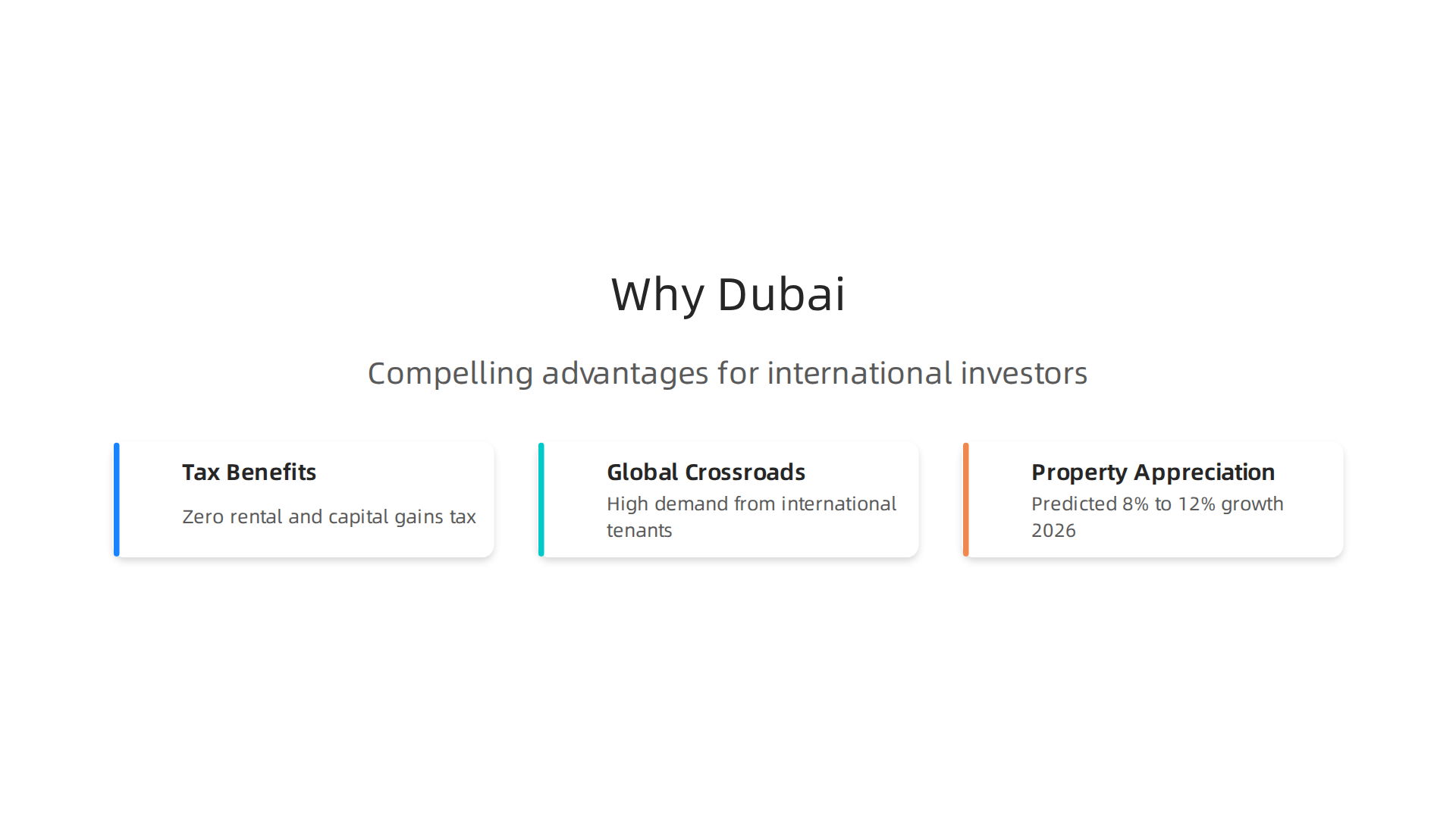
First, the tax benefits are huge. You pay zero tax on rental income and zero capital gains tax. That means every dollar you earn stays in your pocket. In mature markets like London or New York, taxes can eat up 30% or more of your profits. That is a game changer for anyone looking to invest in property overseas.
Second, Dubai sits at a global crossroads. Its world class airport, modern ports, and top notch infrastructure make it easy for international tenants and tourists to visit. This keeps rental demand strong year after year. According to data from SandsOfWealth, gross rental yields for apartments average 6.7% to 7%, roughly double what you earn in most Western cities.
Third, property values keep climbing. Experts from Cushman & Wakefield predict additional price and rental growth of 8% to 12% in 2026. That steady appreciation protects your investment over time and helps you build long term wealth.
If you want to build a solid real estate investment strategy in Dubai, start by learning about the top performing locations. Our guide to high rental yields breaks down which areas offer the best returns for investors.
Ready to take the next step? Book a free consultation with Ayaz Salman for personalized advice tailored to your goals.
Tax-Free Benefits and High Rental Yields
Now let’s talk about the two biggest financial reasons to invest in property overseas: tax savings and rental income. Dubai stands out because you pay nothing in property tax, capital gains tax, or income tax on your rental earnings. That means every dirham you collect goes straight into your pocket.
On top of that, rental yields here are among the highest globally. According to SandsOfWealth, gross rental yields for apartments average 6.7% to 7%, roughly double what investors earn in cities like London or New York. Our guide to high rental yields shows you exactly which areas deliver the best returns.
This combination of zero taxes and strong yields makes Dubai a smart choice for your real estate investment strategy.
Want personalized advice? Book a free consultation with Ayaz Salman to get started.
Political and Economic Stability
Stability might not sound as exciting as tax-free profits, but here’s the thing: it’s the foundation that makes everything else possible. When you are investing in property abroad, you need to know your money is safe.
Dubai is part of the UAE, which ranks high in political stability. The government has worked hard to build a safe business environment. As a result, the market stays steady even when other parts of the world feel uncertain.
The UAE also has a diversified economy. It is not just about oil anymore. Strong sectors like tourism, finance, and logistics keep things growing. Experts at Khaleej Times report that affordable villa rents rose up to 24% in 2025 alone, showing just how active the market is.
For your real estate investment strategy, this matters. Dubai’s legal framework clearly protects foreign property rights. You can buy, sell, and rent with confidence. That makes this one of the safest places to invest in property overseas right now.
To learn more about the best areas for high returns, check out our guide on Dubai real estate investment strategies for 2026.
Want to know if this is the right move for you? Connect with Ayaz Salman for a free consultation.
Understanding Dubai’s Real Estate Laws for Foreign Investors
Now that you know Dubai is stable, let’s look at the rules. You might wonder if you can actually own property here as a foreigner. The answer is yes, but you need to know the basics.
Foreigners can buy freehold property in special zones. These areas include Downtown, Dubai Marina, Palm Jumeirah, and JVC.
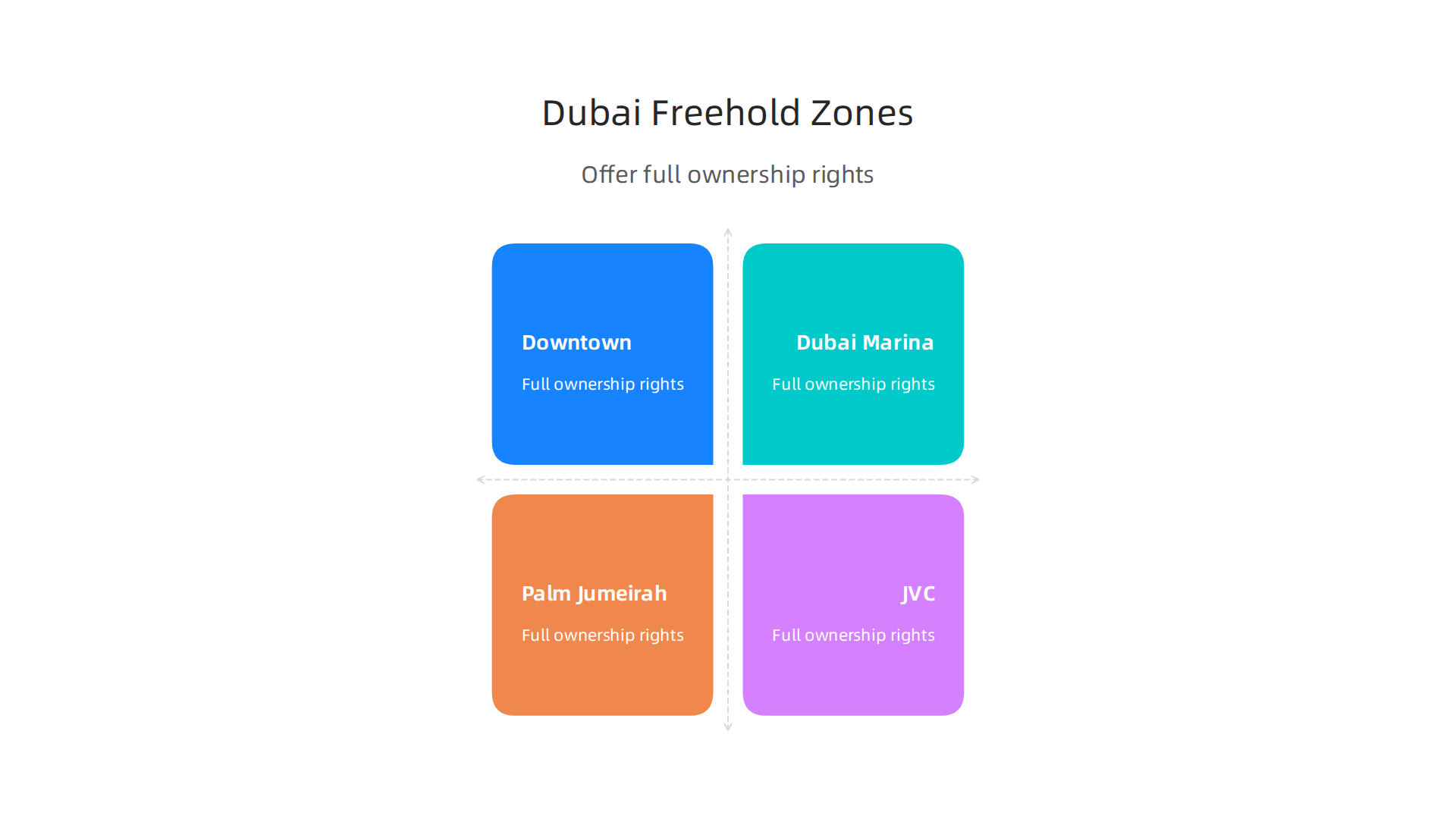
In these freehold zones, you get full ownership rights. According to Lym Real Estate, you own the land and the property completely.
The Real Estate Regulatory Authority, or RERA, oversees all transactions. This government body makes sure everything is fair and legal. When you follow the legal steps from Pearlshire, you verify the developer’s RERA registration before signing anything. This protects your money.
Non-residents have the same ownership rights as residents. You do not need a residency visa to buy property here. As noted by Dubaivisitsvisa, any foreign national with a valid passport can purchase in designated freehold zones.
This clear legal framework makes investing in property abroad much safer. To explore the best areas for your investment strategies real estate, check out our complete guide on Dubai real estate investment strategies for 2026.
Ready to take the next step? Connect with Ayaz Salman for a free consultation. He can walk you through the legal process and help you find the right property.
Freehold vs Leasehold Zones
If you plan to invest in property overseas, Dubai is a top choice. Freehold zones let you fully own the property and the land. Popular freehold areas include Dubai Marina, Downtown, and Palm Jumeirah. As experts at Gulf Land Property note, foreign buyers get 100% ownership rights in these zones. Leasehold areas are different. You get a long lease, usually for 99 years. It costs less upfront, but you don’t own the land. Knowing this difference is key to building smart investment strategies in real estate. Learn more in our guide to property types and top locations. Not sure which zone fits your goals? Get a free consultation with Ayaz Salman.
Key Regulations and Legal Protections
Beyond knowing the zones, you need to understand the rules that protect your money. In Dubai, every property deal must be registered with the Dubai Land Department (DLD). This makes your ownership official and safe. Following the legal steps for foreigners is a must. For off-plan purchases, developers use an escrow account. Your funds are only released when construction hits certain stages. This is a huge safety net. Another big plus for investing in property abroad is that you can send your rental income and sale profits back home with no restrictions. Dubai makes it easy to move your money freely.
For a full walkthrough, check our complete guide to buying property in Dubai. Want to start your investment journey? Get a free consultation with Ayaz Salman.
Step-by-Step Guide to Buying Property in Dubai from Abroad
Now that you understand the rules, here is the simple process for investing in property abroad. If you want to invest in property overseas from home, follow these three steps.
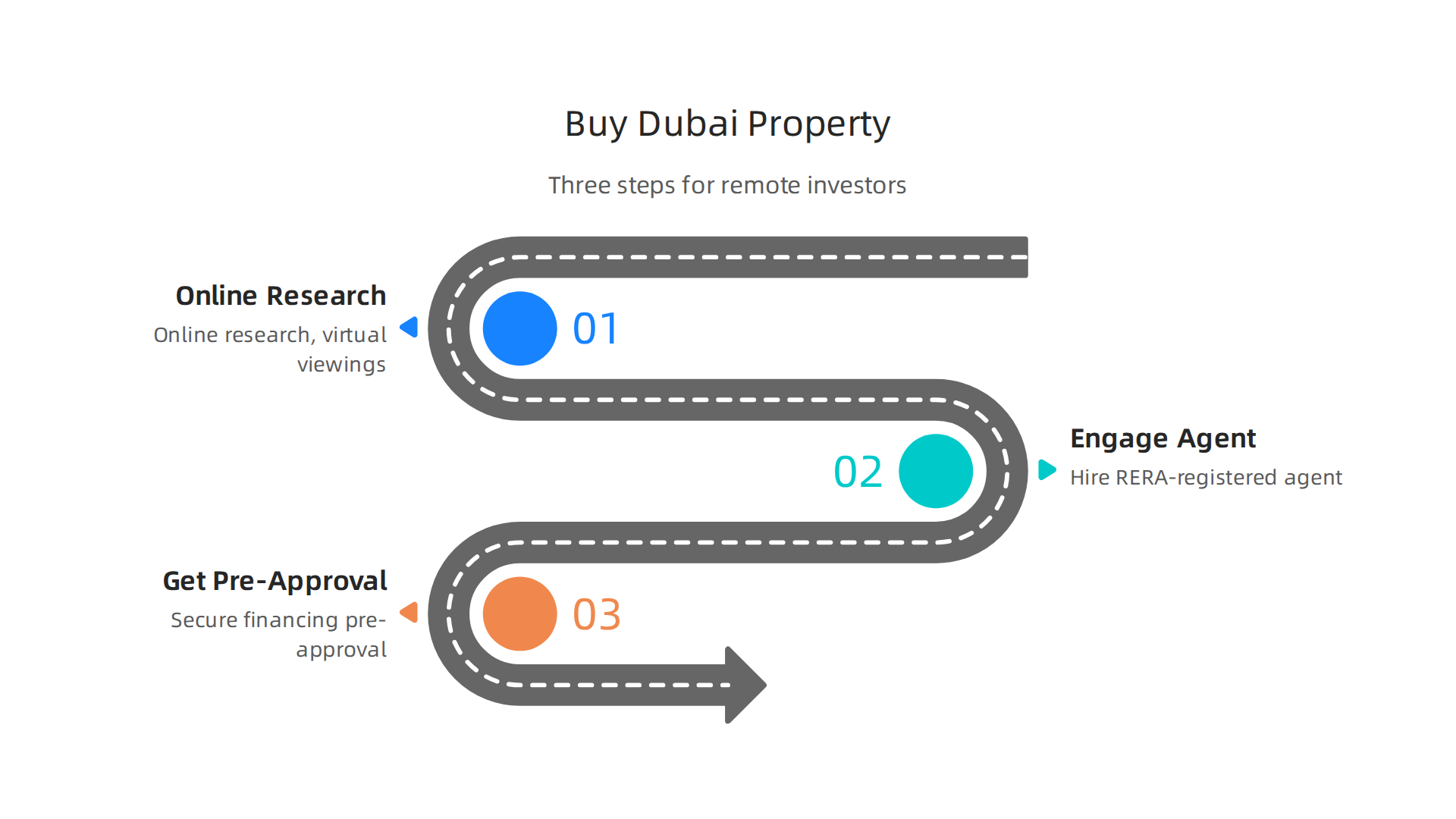
Step 1: Start with online research and virtual viewings. Use property websites and video tours to explore freehold areas like Dubai Marina or Downtown. You can get a real feel for a neighborhood without booking a flight.
Step 2: Engage a RERA-registered real estate agent. Only agents registered with the Real Estate Regulatory Authority can legally handle your deal. They help you navigate the process, avoid scams, and find the best options for your investment strategies real estate goals. As the Pearlshire guide on legal steps explains, verifying the agent’s credentials is a must.
Step 3: Secure financing pre-approval before making an offer. This shows sellers you are serious and speeds up the purchase. Many banks in Dubai offer mortgages for non-residents.
For more on choosing the right location and developer, read our guide on Dubai real estate investment strategies.
Ready to buy from abroad? Get a free consultation with Ayaz Salman to start your real estate investment strategy today.
Finding the Right Property and Developer
When investing in property abroad, start your search on trusted portals like Property Finder and Bayut.

These tools let you filter by location and price.
Remember, as a foreigner you can only buy in freehold zones. The LYM Real Estate guide confirms areas like Downtown and Dubai Marina are open to all.
Next, check the developer’s track record. Look at past projects and completion rates. The Pearlshire guide stresses verifying that the developer is RERA-registered. A solid developer lowers your risk.
Also decide between ready properties and off-plan. Ready gives you immediate income. Off-plan can be cheaper but carries more delay risk. For more on choosing a trustworthy builder, read our full guide on how to pick the right developer in Dubai.
Need a hand finding the right fit? Get a free consultation with Ayaz Salman to match a property with your real estate investment strategy.
The Purchase Process and Payment Plans
Once you pick your property, the purchase process is clear. First, make an offer and sign a Memorandum of Understanding (MoU). Then pay a 10% deposit. For off-plan, your funds go into a secure escrow account. Following these steps, as the Pearlshire guide to foreign buying states, protects your investment. Want to see sample payment plans? Look at this guide on 2026 Dubai Hills villas. Finally, transfer the balance, pay the DLD fee, and register. A winning real estate investment strategy needs a solid purchase plan. Get help with yours! Claim your free Dubai property consultation to master your investment strategies in real estate.
Closing and Registration
After your final payment, the Dubai Land Department (DLD) registers the property in your name. This is the moment your title deed certificate arrives, proving you legally own the home. For anyone investing in property abroad, this step turns your plan into real ownership. The DLD handles the transfer, and you pay a registration fee (usually 4% plus admin costs). One reliable source confirms that foreigners can complete this process in freehold zones without needing local citizenship. To see how different property types compare, read this guide to Dubai real estate investment 2026: property types and locations. It helps you understand which neighborhoods match your investment strategies real estate. Need help from start to finish? Claim your free Dubai property consultation via WhatsApp and secure your title deed with confidence.
Managing Your Dubai Property from Overseas
So you own a home in Dubai but live far away. How do you keep everything running smoothly? This is where smart planning comes in. When you are investing in property abroad, you need a team you can trust on the ground.
A professional property management company handles the hard parts. They find tenants, fix maintenance issues, and stay on top of legal rules. One helpful guide for overseas investors recommends holding regular property inspections to catch problems early. That way you avoid surprises.
Technology also helps a ton. Modern property management software lets you check income, expenses, and repair requests from your phone. You can see what is happening in real time.
But here is the key. You need a clear contract that spells out performance goals. Set KPIs for how fast tenants are found or how quickly repairs happen. This keeps everyone accountable.
If you want a stress free way to manage your investment strategies real estate, consider working with local experts who know the market inside out.

They can turn your real estate investment strategy into steady returns without you lifting a finger.
Need help setting up your management plan? Reach out for a free chat. Claim your free Dubai property consultation via WhatsApp and learn how to protect your investment while you are miles away.
The Challenges of Remote Management
Even with the best tools, investing in property abroad brings real hurdles. Without regular eyes on site, maintenance delays happen. As a guide for overseas investors notes, remote owners cannot physically monitor their property’s condition, so quarterly inspections are a must.
Tenant emergencies add another layer. A burst pipe at 2 a.m. Dubai time means you scramble across time zones. You need local help that acts fast.
Then there are the scattered service providers. Juggling plumbers, electricians, and cleaners on your own eats up time. That is why smart owners build a reliable team. It protects your real estate investment strategy and keeps things simple. For more on protecting your portfolio, check out our Dubai real estate investment 2026 guide to market trends.
Struggling with these issues? A free chat with Ayaz can show you a better way. Claim your free Dubai property consultation via WhatsApp and get started today.
Hiring a Professional Property Management Company
The best way to solve these challenges is hiring a professional property management company. As you invest in property overseas, look for one with RERA registration and strong client reviews. This ensures they follow local rules and treat tenants fairly.
Compare fee structures too. Most firms charge between 8% and 12% of annual rent. Make sure the company offers full services like tenant screening, legal support, and regular inspections. According to a guide for remote owners, managing money across borders is key, so pick a firm that handles payments cleanly.
A good management company takes the stress off your plate. It protects your real estate investment strategy and helps you sleep better.
Ready to make this easier? Claim your free Dubai property consultation via WhatsApp and get expert help today.
Ensuring Maintenance and Tenant Handling
Handling maintenance and tenant issues from another country can feel tricky. That is why a clear system matters so much for your real estate investment strategy.
Start by setting up a separate fund just for emergency repairs. A guide for remote owners shows that having cash ready lets you fix problems fast without stress.
Next, make sure your management company uses a digital platform to track every maintenance request. This gives you a clean record of what happened and when.
Finally, never skip regular inspections. Experts recommend quarterly checks to catch small issues before they become big ones. This is a key part of smart investment strategies in real estate because it protects your property value over time.
Want to make sure your property is in good hands? Get a free consultation and learn how the right team can handle everything for you.
Common Pitfalls and How to Avoid Them
Even smart investors face surprises when investing in property abroad. The good news is most pitfalls are easy to avoid if you know where to look.

Hidden costs can eat into your profits. Things like annual service charges, maintenance fees, and agent commissions add up fast. Always ask for a full breakdown before buying. Property experts warn that these extra fees can be up to 10 percent of your rental income.
Legal traps are another big risk. Some investors deal with unregistered agents or developers not approved by RERA. That can cost you your deposit or worse. Always verify that any agent is registered. This guide on picking the right developer shows you exactly what to check.
Currency changes and home country taxes also matter. Exchange rates can shift fast and cut into your returns. Experts recommend creating a hedging plan to protect your money.
Want to avoid these mistakes from day one? Get a free consultation and let an expert guide you through every step of investment strategies in real estate.
Hidden Costs and Fees
Here is the thing about investing in property abroad. The asking price is never the final number. If you do not plan for extra fees, your returns shrink fast.
In Dubai, the Dubai Land Department charges a transfer fee of 4 percent of the property price. That is a big chunk if you are buying a AED 1 million apartment. You also have annual service charges. These range from AED 10 to AED 25 per square foot depending on the building and community. For a 1,000 square foot unit, that could mean AED 10,000 to AED 25,000 every year.
Agent commissions add another 2 percent of the purchase price. So if you are working with a low budget, these costs eat into your down payment fast.
The best way to stay safe is to ask for a complete cost breakdown before you sign anything. Many first time buyers skip this step and regret it later. Understanding your full financial picture is a key part of any solid real estate investment strategy.
Want to run the numbers for your specific budget? Get a free consultation to get personalized advice on costs and fees. You can also check out this guide on property types and top locations to see how fees vary by community.
Legal Traps and Scams
When investing in property abroad, watch out for legal traps. Use only agents registered with RERA. Check their license number. Avoid off-plan deals with unapproved developers or any project without an escrow account. Never send money to a personal bank account. Always use official channels. These simple steps keep your investment safe. Managing money across borders is a top concern for overseas investors, so stay strict.
Need help vetting a developer? Read our guide to picking the right developer in Dubai.
Get a free consultation to review your next purchase for hidden risks.
Financing Your Dubai Property Investment
You have two main options when investing in property abroad in Dubai. Pay cash or get a mortgage.
A cash purchase is the fastest route. You skip the bank, close the deal quickly, and often get a better price. Many non-residents choose this path because it is simple and direct.
But if you want to use financing, you can get a mortgage from UAE banks even if you do not live there. Most lenders require a down payment of 35% to 40% of the property value for non-residents, according to Engel & Völkers. The loan covers roughly 50% to 60% of the property price.
Here is the trade off. Interest rates for non-residents run about 1% to 2% higher than what residents pay. Banks like HSBC UAE and FAB offer competitive home loans for foreigners looking to invest in property overseas.
Which option fits your real estate investment strategy? A solid investment strategies real estate plan starts with knowing your numbers up front. You can explore more about proven approaches in our complete guide to Dubai real estate investment strategies.
Not sure which financing path works for you? Get a free consultation to talk through your options with an expert who knows the Dubai market.
Mortgage Options for Non-Residents
So what do banks actually look for when you apply for a mortgage as a non-resident? They want to see that you can afford the loan. Most lenders will ask for proof of income, recent bank statements, and a credit check from your home country. This helps them understand your financial history and stability.
The minimum down payment for non-residents usually falls between 35% and 50% of the property value. Banks like FAB and HSBC UAE offer these loans, as explained by Engel & Völkers. The processing time can take about four to six weeks, so plan ahead.
If you are still deciding which real estate investment strategy fits your goals, you can learn more about property types and locations in our complete guide to Dubai real estate investment.
Ready to start your mortgage process? Get a free consultation with a Dubai expert who can walk you through the paperwork step by step.
Cash vs. Mortgage Analysis
Here is the big question when investing in property abroad: should you pay cash or get a mortgage? Both have their pros.
Paying cash gives you strong negotiation power with sellers. You also get immediate ownership with no monthly payments eating into your rental income. That is a clean, simple deal.
Using a mortgage, on the other hand, lets you spread your capital across multiple properties. This is a smart investment strategies real estate move. You can own two or three properties instead of just one.
The key is to calculate your net yield. Add up your mortgage costs including interest, fees, and insurance. Then subtract that from your rental income. Sometimes cash wins. Sometimes leverage wins.
Looking for the best investment strategies in real estate? Get a free consultation with a Dubai expert to run the numbers for your specific budget.
You can also read our guide to proven strategies for high rental yields and growth to see how other investors structure their deals in 2026.
Maximising Returns: Rental Yields and Capital Appreciation
Once your financing is sorted, the real question is how to make your money grow. The best investment strategies real estate focus on two things: rental income and property value going up.
Location matters most. Pick areas with strong tenant demand and limited supply. That keeps occupancy high and rent stable.
Off-plan properties can give instant value gains once completed. Many investors use this real estate investment strategy for their biggest profits.
Short-term rentals like holiday homes bring in more income than long-term leases. But they need more hands-on management. If you have a good property manager, the extra money is worth it.
Non-residents now have more mortgage options than ever in Dubai. Many banks offer loans to foreigners, making it easier to invest in property overseas. Some lenders provide up to AED 10 million for non-residents, according to FAB.
Ready to find your next high-yield property? Get a free consultation with a Dubai expert.
You can also check our guide to picking the right developer and maximizing returns for more tips on making the most of your investment.
Best Areas for Rental Income
Location is everything. In 2026, these areas offer the strongest returns.
Dubai Marina and JLT remain top picks for professionals. High demand from office workers keeps occupancy up. Business Bay and Downtown attract corporate tenants looking for prestige and easy access.
Emerging areas like Dubai South show good future potential. Prices are lower now, but growth is expected. These spots fit a smart real estate investment strategy for long-term gains.
Non-residents can finance properties in these areas easily. Banks like FAB offer loans up to AED 10 million for those looking to invest in property overseas, making top locations more accessible.
For more on where to buy, read our guide to Dubai real estate investment 2026 guide to property types and top locations.
Ready to pick the best area for your portfolio? Get a free consultation with a Dubai expert today.
Strategies for Capital Growth
To grow your money through investing in property abroad, focus on capital appreciation. One smart play is buying off-plan in master-planned communities like Dubai South or Dubai Creek Harbour. These areas often see big price jumps once construction finishes. A solid real estate investment strategy includes targeting spots with upcoming infrastructure, such as new metro lines or the Expo 2020 legacy district. Timing matters too. Buying during small market dips can lead to strong long-term gains. For investment strategies in real estate, always research the developer’s track record. Check our guide on picking the right developer to avoid common pitfalls. Ready to plan your next move? Get a free consultation with a Dubai expert.
Future Trends and Opportunities in Dubai Real Estate
Looking ahead, investing in property abroad in Dubai keeps getting more exciting. New freehold zones are opening in areas like Dubai South and Al Jaddaf, giving foreign buyers more options to own property. You can explore these in the latest development projects across the city. At the same time, sustainable and smart homes are gaining traction. Developers are building eco friendly villas and apartments with energy saving tech, which often attract higher rental demand. Regulatory changes may also further ease foreign ownership, making it simpler to invest in property overseas. For a full picture of where the market is heading, check our guide on Dubai market trends and high rental yields. Ready to ride these trends? Get a free consultation with a local expert to find your best opportunity.
Emerging Areas and New Developments
If you are investing in property abroad, keep an eye on three up and coming areas in Dubai. The market there is open to foreign buyers in freehold zones, so you can own property in these spots. (Two Continents: latest development projects in Dubai)
Dubai South sits near Al Maktoum International Airport and the future Expo site. It is built for logistics and travel, which means strong rental demand over time.
Al Jaddaf is a cultural district with prices that feel more affordable than central areas. Canals and parks make it popular with families and young professionals.
Meydan is a large master planned community with sports facilities, horse racing, and green spaces. It offers a balanced lifestyle for residents and investors.
To see how these areas compare to other top spots, read our guide on property types and top locations in Dubai. Want help choosing the right neighborhood? Get a free consultation with a local expert.
Upcoming Regulatory Changes
Dubai keeps making it easier for people investing in property abroad. Here are three big changes to watch.
First, freehold zones may expand to more areas. Foreign buyers can already own property in these zones, and that access could grow. (Two Continents)
Second, visa rules are getting simpler. The Golden Visa program already helps investors stay long term. A new retirement visa tied to property ownership is also coming. (Times of Malta)
Third, property registration and transactions are moving online. This cuts paperwork and speeds up the buying process.
These changes make it a smart time to review your real estate investment strategy. For more on market trends, read our guide to high rental yields.
Want personal help? Get a free consultation to talk about your investment goals.
Summary
This guide explains why Dubai is a top destination for investors looking to buy property overseas, highlighting strong gross rental yields (around 6.7–7%), tax-free rental and capital gains, and specialist forecasts of 8–12% price and rental growth in 2026. It walks non-resident buyers through the legal framework — freehold zones, RERA oversight and Dubai Land Department registration — and contrasts freehold and leasehold options so you can pick the right ownership model. The article outlines a clear purchase process you can complete from abroad (virtual viewings, RERA-registered agents, deposit and escrow protections), and covers financing choices for non-residents, including typical down payments and mortgage timelines. You’ll also get practical advice for managing property remotely — hiring RERA-registered property managers, setting KPIs, scheduling inspections and keeping an emergency maintenance fund — plus common pitfalls to avoid like hidden fees, unregistered developers and currency risk. Finally, the guide explores where to buy, how to maximise yields and capital growth, and upcoming market and regulatory trends, with options to book a free consultation for personalised help.